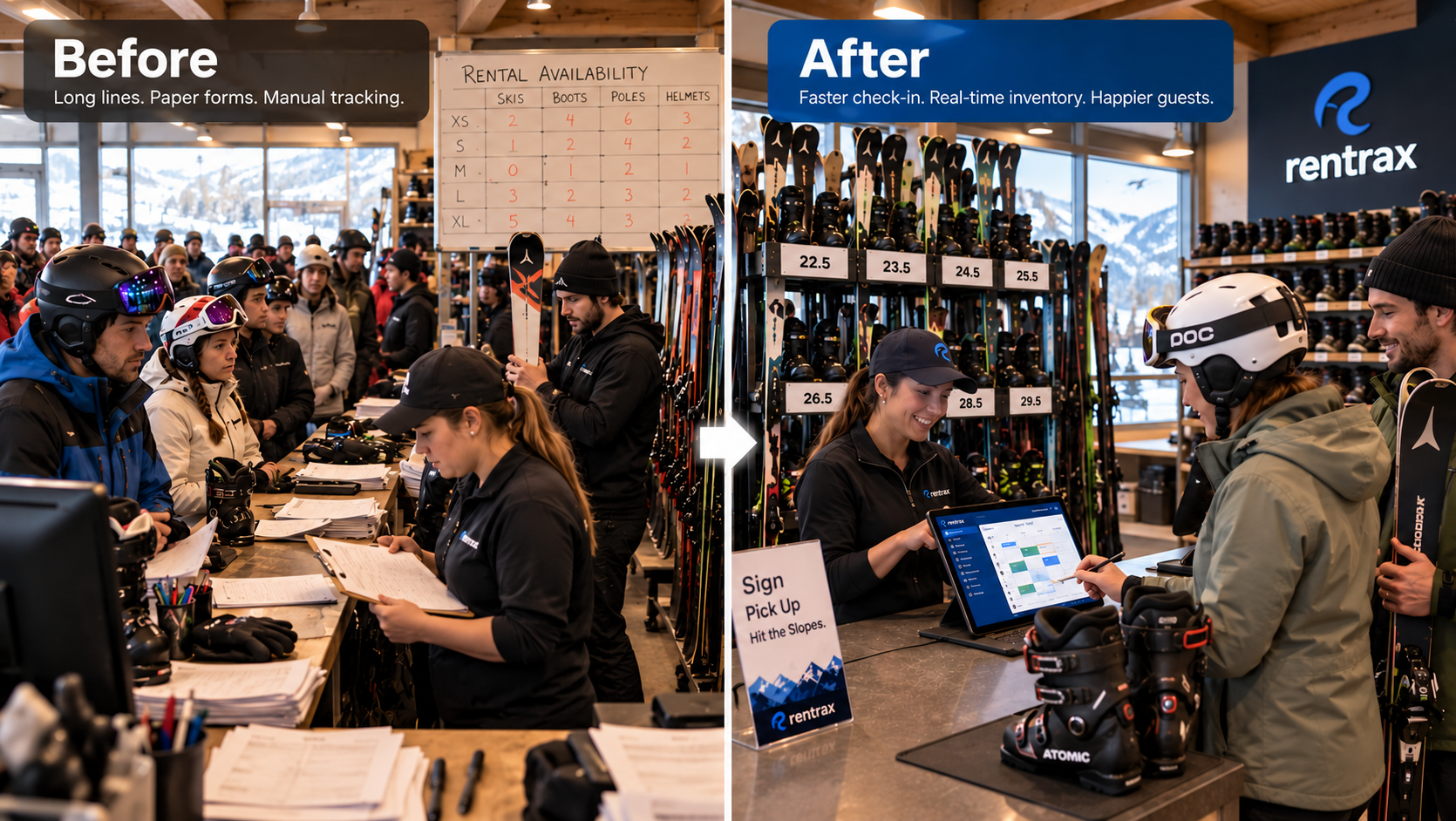
How to Reduce Ski Rental Checkout Lines During Peak Season
Long ski rental checkout lines cost you customers and revenue. Here
are 7 proven ways ski rental software reduces wait times and speeds up peak-season service.

Starting a Kayak rental business can be a perfect idea on the growing demand for recreational water activities. Whether located near lakes, rivers, or coastal areas, a kayak rental business can generate steady revenue. Success in this industry requires selecting the right location, investing in quality equipment, and implementing marketing strategies. With proper planning, this adventure can become a profitable and sustainable enterprise.
Yes, it can absolutely be profitable; if you plan it smartly.
But like any business, success depends on location, pricing, equipment quality, marketing, and operations.
Kayak rental businesses generally have:
However:

Here are key trends that make it a good idea now:
Let’s build a simple example for a small kayak rental startup:
| Metric | Example Numbers |
|---|---|
| Number of kayaks | 10 single kayaks + 5 tandem kayaks |
| Rental rate per hour | $25 for single, $40 for tandem |
| Average rental duration | 2 hours per session |
| Average rentals per day | 10–20 rentals (weekends much higher) |
| Season length | 5 months (May–September) |
Now calculate:
Plan on strategic execution is the first answer to how to start a kayaking business. Each step in starting a kayak rental business plays a crucial role in building a profitable operation. By following a structured approach and addressing key business factors, business owners can establish a thriving kayak rental service. Read the text below to know How to start a jet ski rental business and kayak rental business.
Market research is the first step in starting any business. You must research demand to determine if your idea has enough market potential and if the market is ready for it.
You need to research 5 key things:
| Step | What to Research | How to Do It | Tools |
|---|---|---|---|
| 1 | Demand (Customers) | Are there enough tourists, locals, or outdoor enthusiasts? | Google Trends, Statista, Google Keyword Planner |
| 2 | Location | Are there suitable waters (calm river, lake, bay)? | Google Maps, Site Visits, Local Authorities |
| 3 | Competition | Who else rents kayaks? How good are they? | Google Maps, Yelp, TripAdvisor |
| 4 | Pricing | How much are others charging? | Their websites, phone calls as a "secret shopper" |
| 5 | Rules/Permits | What legal permits or marine rules exist? | Local government websites, Business licensing offices |

You must check:
Example Actions:
Here’s an example of demand comparison based on average monthly search volume in three different locations, as shown by Google Keyword Planner. You can clearly see the differences and the seasonal trend.

You must deeply analyze your competition:
Here’s a competitor analysis table template:
| Competitor Name | Location | Prices | Offerings | Reviews (Stars) | Weakness |
|---|---|---|---|---|---|
| XYZ Kayak Rentals | Miami Beach | $30/hr | Kayaks + Paddleboards | 4.2 | Poor customer service |
| ABC Tours | Lake Tahoe | $40/2hr | Kayaks + Guided Tours | 4.8 | Expensive for families |
| FastPaddle Co. | Santa Barbara | $25/hr | Only Single Kayaks | 4.0 | No tandem kayaks |
After filling this for 5–10 businesses around your desired area, you will clearly see opportunities (e.g., maybe nobody offers early morning rentals!)
You must match or slightly undercut the price depending on:
Example Actions:
| Step | Findings |
|---|---|
| Area | Lake Tahoe, Monterey Bay, Santa Barbara |
| Demand | High — California tourism is massive, especially coastal. |
| Competition | High around beaches, but small lakes around Sacramento = low competition. |
| Permits | Coastal Commission, city business license, possible insurance requirement. |
| Opportunity | Offer sunrise rentals or eco-tours (very popular trend in CA). |
Pro Tip: Avoid San Francisco Bay for beginner kayak rentals; strong currents, high-risk.
| Step | Findings |
|---|---|
| Area | Miami Beach, Tampa Bay, Key West, Fort Lauderdale canals |
| Demand | Extremely High — Florida = year-round outdoor activity. |
| Competition | High near beaches; lower around canals and state parks. |
| Permits | FWC (Florida Fish and Wildlife) regulations apply, plus local city permits. |
| Opportunity | Offer kayak + snorkeling combo tours (super popular with tourists). |
Pro Tip: Focus on manatee-viewing kayaking in winter around Crystal River. It’s one of the most profitable niches (and not everyone offers it).
A Business Plan is like your company’s GPS; it shows where you’re going, how you’ll get there, and what resources you’ll need.
Even if you don’t need investors, writing a plan makes your ideas clear, professional, and realistic.

| Section | Purpose |
|---|---|
| 1. Executive Summary | Quick overview of your business idea. |
| 2. Company Description | Who you are, what you offer, why you exist. |
| 3. Market Research Summary | Key findings about customers, demand, and competition. |
| 4. Services and Pricing | What you will rent and how much you’ll charge. |
| 5. Marketing and Sales Plan | How you'll get customers (advertising, partnerships, etc.). |
| 6. Operations Plan | How you’ll run daily activities. |
| 7. Management and Staff | Who is running the business. |
| 8. Financial Plan | Costs, pricing, profit projection. |
| 9. Milestones & Timeline | What needs to happen and when. |
| Service | Price |
|---|---|
| Single Kayak Rental (2 Hours) | $40 |
| Tandem Kayak Rental (2 Hours) | $55 |
| Guided Eco-Tour (2 Hours) | $70 per person |
| Full-Day Rental | $85 |
Other possible services:
Break into three parts:
| Date | Milestone |
|---|---|
| Jan 202X | Complete market research |
| Feb 202X | Finalize location and permits |
| Mar 202X | Purchase equipment |
| Apr 202X | Build website and start marketing |
| May 202X | Begin partnerships with hotels |
| June 202X | Official launch 🚀 |
Choosing a great location is one of the most important steps in starting your canoe and kayak rental business. While other decisions, such as your business plan, marketing strategy, and equipment, are somewhat reversible and can be changed later, changing location is not as easy. Therefore, pay attention to this step.
Search Trend of the keyword “Kayak Rental Near Me” in United States based on Location:
Search Trend of the keyword “Kayak Rental Near Me” in Canada based on Location:

Here’s a full breakdown:
| Factor | What to Check | Why It Matters |
|---|---|---|
| Water Conditions | Calm water (lake, bay, slow river) | Safer, beginner-friendly, more bookings |
| Accessibility | Parking, easy entry, dock/beach access | Customers won't carry kayaks far |
| Tourist Activity | Are there enough visitors? Hotels? Campgrounds? | More people = more rentals |
| Competition | Are there already kayak rentals? Are they weak or full? | Low competition = easier success |
| Permits and Legal Access | Is it allowed to operate rentals here? | To avoid heavy fines or getting shut down |
| Seasonality and Climate | How many months per year is kayaking possible? | Longer season = more profits |
| Local Population | Even without tourists, are there locals into outdoor sports? | Helps with weekday rentals |
| Visibility and Foot Traffic | Is it a popular walking/beach spot? | Walk-up customers can boost sales |
| Launch Site | Smooth, safe area to put kayaks into water | Important for customer experience |
| Environmental Protection Rules | Some areas ban motor boats but allow kayaks | Sometimes a bonus (eco-tourism markets!) |
If your location checks 7–8 of these boxes, it’s a very strong location. If only 3–4 boxes checked, it’s very risky; you should move to another spot.
| Location | Good or Bad | Why |
|---|---|---|
| Lake Tahoe (North side) | Good | Calm, massive tourism, easy beach access |
| San Francisco Bay (downtown) | Bad for rentals | Strong currents, busy port, expensive permits |
| Miami Beach canals | Good | Calm waters, tourist hotspots, year-round warm |
| Remote desert lake (no cities around) | Bad | No tourists, small local population, short season |
Here’s my expert suggestion based on your idea of the US 🇺🇸, Canada 🇨🇦, or Australia 🇦🇺:
| Country | Recommended Places | Why Good? |
|---|---|---|
| USA | Lake Tahoe (CA/NV), Tampa Bay (FL), Hilton Head Island (SC), Lake Austin (TX) | Tourists, calm water, outdoor-friendly cities |
| Canada | Kelowna (BC), Muskoka Lakes (ON), Okanagan Lake (BC), Prince Edward Island beaches | Huge summer tourism, stunning lakes, growing outdoor activity market |
| Australia | Gold Coast (QLD), Sunshine Coast (QLD), Noosa Heads (QLD), Mornington Peninsula (VIC) | Warm climate, huge tourism, outdoor culture |
All these locations have:
To legally operate a kayak rental business, ensure compliance with regulations. Here are essential steps to get your kayak or canoe rental business legit.

Your business name should be:
Example names:
Here are some actions you can take:
You must pick a legal business type. Here’s the simple version for beginners:
| Structure | US | Canada | Australia | Notes |
|---|---|---|---|---|
| Sole Proprietorship | ✅ | ✅ | ✅ | Easiest to start, but you are personally liable. |
| Partnership | ✅ | ✅ | ✅ | If you have a co-founder. |
| LLC (Limited Liability Company) | ✅ | - | - | Best beginner option in US — protects your personal assets. |
| Corporation | ✅ | ✅ (INC.) | ✅ (PTY LTD) | Good for larger businesses or if raising investment. |
Best for most kayak startups:
Here we take a look at 3 countries:
Depending on the country and structure:
In US, you file an LLC’s taxes via your personal income tax. In Canada, as sole proprietor you include your business earnings in personal tax. In Australia, Sole Traders also include it in their personal income tax return.
Simple Rule:
You CANNOT just throw kayaks in the water and start renting without permits!
Each country – and usually, each state/province/council – controls this.
| Type | Why Needed | Notes |
|---|---|---|
| Business License | Permission to run a business in your city/county | Apply with city or county office. |
| Use of Public Space | If you launch kayaks from public beach/park | May require a permit or partnership with city parks. |
| Waterway Permit | Some lakes/rivers require permits for commercial use | Often applies to larger or protected waterways. |
| Liability Insurance | Required for public operation to cover accidents | Must have general liability + water sports coverage. |
| Environmental Permits | Only needed if in protected environmental zones | Check if operating in national parks, protected bays. |
Partnerships give you:
Instead of paying $20–$30 for online ads for every customer, you can get steady customers from hotels, resorts, campsites, etc.

| Partner Type | Why They're Great | Example |
|---|---|---|
| Resorts | They offer activities to guests, often need reliable local partners. | Beach resorts, lakeside resorts. |
| Hotels & Motels | Tourists ask receptionists for activity ideas. You want to be the "recommended kayak rental." | Marriott, Holiday Inn, local boutique hotels. |
| Campgrounds & RV Parks | Campers love outdoor activities like kayaking. | KOA campgrounds, national park campsites. |
| Tour Operators | They offer packaged experiences. You can be their kayak supplier. | Eco-tour companies, travel agencies. |
| Airbnb Hosts | Private hosts love to offer activities to make their listing stand out. | Message local hosts in your area. |
| Marinas & Docks | Marinas often allow kayak rentals on site for an extra fee. | Small town marinas. |
| Tourism Boards | Local tourism offices promote activities — they can list you on official websites. | VisitFlorida, Tourism Australia, Destination BC. |
It should include:
| Model | How It Works | Good For |
|---|---|---|
| Flat Fee | Pay resort/hotel $X per month to recommend you. | Busy locations with guaranteed tourist flow. |
| Commission | Pay hotel 10–20% per referred rental. | Win-win: they only earn if you get customers. |
| Exclusive Discount | Give their guests 10% off kayak rentals. | Looks good for their marketing. |
| Free Equipment | Offer free kayaks for the resort’s private use in exchange for referrals. | High-end resorts. |
Why you should diversify?

Start simple, strong, and related to kayaking first. Here’s a list:
| Service | Why Offer It | Example |
|---|---|---|
| Single Kayak Rental | Main income source, easy for beginners | 2 hours, half-day, full-day rental options |
| Tandem Kayak Rental | Families, couples prefer double kayaks | Charge slightly higher than single kayak |
| Guided Tours | Some people want structure or a guide | Sunset tours, eco tours, wildlife tours |
| Delivery & Pick-Up Service | Huge for Airbnb guests and lakeside renters | Deliver kayaks directly to their cottage or house |
| Kids Kayak Rentals | Special smaller kayaks for kids | Attract family bookings |
Once your kayak rentals are running smoothly, you can add related services:
| Service | Pros | Cons |
|---|---|---|
| Stand-Up Paddleboard (SUP) Rentals | Fast growing market, low storage space | Need training on safe use |
| Canoe Rentals | Popular for families or fishing | Harder to transport than kayaks |
| Jet Ski Rentals | High profits, thrilling | Expensive equipment, strict licensing & insurance |
| Kayak Fishing Packages | Big niche, especially in lakes and rivers | Requires extra fishing gear, licenses |
| Eco Tours (Guided) | Eco-tourism is booming | Need knowledge of local wildlife and regulations |
| Sunset/Sunrise Paddle Experiences | Very popular with tourists | Weather sensitive |
| Snorkeling + Kayaking Combos | Perfect for tropical/coastal areas | Need snorkeling gear, safety training |
| Events/Group Bookings | Corporate outings, school trips | More logistics but bigger payments |
| Kayak Yoga Classes | Niche market, popular in trendy cities | Need partnerships with yoga instructors |
Start small, then expand gradually:
Use this simple framework:
| Question | If "Yes" → Consider this service |
|---|---|
| Is there already demand for this service here? | (Example: People asking about paddleboards.) |
| Is it easy to add (cost, storage, permits)? | (Example: Adding 5 paddleboards costs ~$3,000, manageable.) |
| Does it fit my brand? | (If you’re a calm eco-tourism brand, adding jet skis might confuse customers.) |
| Can I make at least 30–40% profit margin? | (Otherwise it’s not worth your time.) |
Here is a full list of equipment you need:
| Equipment | Purpose |
|---|---|
| Kayaks (Single + Tandem) | Your main rental product |
| Canoes (optional) | For groups/families or fishing |
| Paddles | One paddle per seat |
| Life Jackets (PFDs) | Mandatory for safety & legal |
| Safety Whistles | Often legally required with PFDs |
| Dry Bags | Optional upsell or free add-on |
| Transport Trailer | To move kayaks to water site |
| Transport Vehicle (Van/Truck) | Optional if you need to move equipment frequently |
| Docking Equipment (if needed) | Racks, ropes, dock space rental |
| Storage Racks | To store kayaks properly |
| Repair Kit | Minor patch-ups and maintenance |

| Type | Best For | Pros | Cons |
|---|---|---|---|
| Recreational Kayak | Beginners, casual paddlers | Stable, easy to use, affordable | Not for rough water |
| Tandem Kayak | Families, couples | 2 riders = more fun, higher rental price | Heavier to move |
| Fishing Kayak | Fishing enthusiasts | Rod holders, stable | Heavier, more expensive |
| Touring Kayak | Long trips, serious paddlers | Faster, tracks better | Expensive, less stable for beginners |
| Sit-on-Top Kayak | Beginners, tropical climates | Easy to get on/off, good for rentals | Less dry inside (wet ride) |
| Canoe | Families, groups, gear transport | Holds more people or gear | Harder to paddle solo, heavier |
Best type for rental startup:


| Item | Best Brands / Models | Approximate Cost |
|---|---|---|
| Life Jackets (PFDs) | Onyx, NRS | ~$40–$70 each |
| Paddles | Bending Branches, Carlisle Magic Plus | ~$50–$80 each |
| Safety Whistles | Basic Amazon multipacks | ~$2 each |
| Dry Bags | Earth Pak, Sea to Summit | ~$20–$30 each |
| Transport Trailer | Malone Microsport Trailer | ~$2,000–$3,000 |
| Transport Van (Used) | Ford Transit, Dodge Ram ProMaster (used) | ~$15,000–$30,000 |
| Storage Racks | DIY wooden rack or Yakima brand | ~$300–$800 |
Let’s assume you want a small but solid startup fleet:
| Item | Quantity | Cost Each | Total |
|---|---|---|---|
| Single Kayak (Perception Tribe 9.5) | 8 | $700 | $5,600 |
| Tandem Kayak (Perception Tribe 13.5) | 4 | $900 | $3,600 |
| Kids Kayak (Pelican Solo) | 2 | $200 | $400 |
| Canoe (Old Town Saranac 160) | 2 | $1,000 | $2,000 |
| Life Jackets | 20 | $50 | $1,000 |
| Paddles | 20 | $70 | $1,400 |
| Whistles | 20 | $2 | $40 |
| Dry Bags (optional) | 10 | $25 | $250 |
| Trailer (Malone Microsport) | 1 | $2,500 | $2,500 |
| Misc. gear/repair kits | - | - | ~$500 |
Startup Equipment Total: ≈ $17,290 USD
Plus vehicle (used van) if you want to transport yourself: add ~$20,000 max.
Ballpark Range:
Canada and Australia are generally ~10–20% more expensive (equipment, insurance).

| Category | Item | Estimated Cost |
|---|---|---|
| Business Setup | Business registration, permits, lawyer fees | $500–$2,000 |
| Equipment | Kayaks, canoes, paddles, life jackets, trailer, etc. (from Step 7) | ~$17,000 |
| Transport | Used Van/Truck (optional but helpful) | ~$15,000–$30,000 |
| Location Costs | Dock rental, storage facility, or beach permit | $1,000–$8,000/year |
| Insurance | General Liability + Property Insurance | $1,500–$3,000/year |
| Marketing | Website, logo, online ads, flyers, banners | $1,000–$3,000 |
| Software | Booking system (simple), credit card reader (like Square) | $500–$1,000 |
| Employee Wages | If hiring help (2 months seasonal) | ~$6,000 |
| Maintenance & Repair Kit | Patches, extra gear | $500 |
| Miscellaneous | Unexpected fees, small equipment | $1,000 |
Total Startup Cost Estimate:
| Item | Typical Monthly Cost |
|---|---|
| Staff salaries (if any) | $2,000–$4,000 |
| Marketing (ads, SEO, flyers) | $200–$500 |
| Insurance (monthly equivalent) | $150–$250 |
| Fuel/Transport (if delivering kayaks) | $300 |
| Storage space rent (if needed) | $300–$800 |
| Repairs | $100–$200 |
Fixed monthly costs: ~$3,000–$5,000 per month
Here are realistic, beginner-friendly ways to get funding:
Best combo for beginners:
What Are the Risks in a Kayak Rental Business?
Insurance protects you from all of these and keeps your business alive even during bad events.

| Insurance Type | What It Covers | Mandatory? | Notes |
|---|---|---|---|
| General Liability Insurance | Covers customer injuries, third-party property damage | ✅ Must-Have | Required by most cities, parks, marinas. |
| Commercial Property Insurance | Covers damage/theft of your kayaks, paddles, trailer | ✅ Highly Recommended | Especially important if you store gear on-site. |
| Commercial Auto Insurance | Covers your van/truck if used for business | ✅ If you transport kayaks | Personal auto insurance won't cover business accidents. |
| Workers' Compensation Insurance | Covers employee injuries on the job | ✅ If you hire employees | Mandatory in most countries if you have staff. |
| Professional Liability (optional) | Covers errors in your guided tours (bad advice) | Optional | Useful if you run eco-tours, fishing tours. |
| Equipment Floater Insurance | Covers kayaks even when off-site (beaches, trailers) | Optional but smart | Good if you operate mobile rental setups. |
| Type | Approximate Annual Cost (USD) | Notes |
|---|---|---|
| General Liability ($1M coverage) | $1,000–$2,500 | Based on location and claim history |
| Commercial Property Insurance | $500–$1,000 | Depends on fleet value |
| Workers' Compensation (if 1–2 employees) | $800–$1,500 | Depends on salaries |
| Commercial Auto Insurance (for van) | $1,200–$2,500 | Required if you transport kayaks |
| Optional Add-Ons (Pro Liability, Floaters) | $300–$800 | Depends on services offered |
Budget around $2,500–$5,000 per year for full proper insurance if you operate a small to medium-size kayak rental business.
In seasonal businesses, if you don’t plan, you could run out of money before next summer. This is because of lower customer demand, equipment maintenance costs, fixed expenses, and weather issues.
Here is a simple rule:
You must make enough money in your high season (summer) to cover:

Here’s a mindset to keep in mind: In summer, work hard and save aggressively. In winter, focus on repairs, marketing, and planning for the upcoming year.
Seasonal business success hinges on discipline in saving and preparing!

Building a brand = Building a feeling in people’s minds about your company.
You want people to think:
“Fun, safe, high-quality kayaking experience” whenever they hear your business name.
Key Elements of a Good Kayak Rental Brand:
| Element | Description | Example |
|---|---|---|
| Business Name | Short, memorable, related to water or adventure | EasyPaddle Rentals, AquaQuest, PaddleTime |
| Logo | Clean, simple, outdoor feeling | Waves, paddles, sun, kayaks |
| Slogan | Short sentence that summarizes your vibe | "Explore the Waters with Ease" |
| Visual Style | Consistent colors (blue, green, sandy colors), clean fonts | Use across website, flyers, signs |
| Voice | How you speak in marketing — casual, fun, friendly | "Ready to paddle your adventure?" |

Kayak Adventures Worldwide: kayakak.com
Their whole vibe feels: Eco-conscious, expert-guided, nature-friendly — not just “rent a boat.”
Your website must be:
Here is a checklist for your Kayak Rental website:
| Section | What to Include |
|---|---|
| Homepage | Beautiful photo, simple description, "Book Now" button |
| About Us | 3–5 sentences about your story, love for kayaking |
| Services | Clear list of rentals (single, tandem, tours) + prices |
| Book Now | Online booking form (date, time, number of kayaks) |
| Gallery | Happy customers, scenic water views |
| Contact Info | Phone, email, map, hours, social media links |
| FAQ | Safety info, what to bring, weather policy |
| Reviews/Testimonies | Real customer feedback (builds trust) |
Use a simple booking system software like Rentrax.

SeaTrek Kayak & Paddleboard Center: seatrek.com
You need MULTI-CHANNEL marketing; not just one way. Use online + offline together!
Here are top marketing channels for Kayak Rentals:
| Channel | How to Use It | Tip |
|---|---|---|
| Google Business Profile (GMB) | Register your business for FREE on Google Maps | Your most important online tool |
| Facebook and Instagram Ads | Run local ads targeting people near lakes, beaches | Start with $5–$10/day budget |
| Partnerships | Hotels, campsites, resorts refer customers to you | Offer 10–20% commission or special guest discounts |
| Flyers & Brochures | Distribute at hotels, campgrounds, cafes nearby | Always include QR code to your website |
| Tourism Websites | Get listed on local tourism board websites | Many offer free or cheap listings |
| TripAdvisor/Viator | Set up a free account and list your rentals/tours | Tourists trust these platforms heavily |
| Local SEO | Optimize your website: "Kayak Rental + City Name" | Helps Google find you locally |
| YouTube/TikTok Reels | Post short fun kayaking videos | "Top 5 Hidden Lakes to Kayak near [Your City]" |
First of all, let’s see why you need a rental management software or a tool:
Yes, spreadsheet works for 2–3 rentals a day. But once you hit 10+ customers/day, you need real software like a jet ski rental management software or a boat rental management software.

Here is a quick look at what options you have:
| Software | Pros | Cons | Pricing (approx.) |
|---|---|---|---|
| Rentrax | Specifically designed for rental businesses (sports rentals especially), fast setup, inventory + waiver management included + Usage-based pricing which is perfect for small businesses | A bit complex, but offers training sessions | Starts ~$10/month |
| FareHarbor | Great for tour operators, strong mobile-friendly booking system | Takes a % of each booking instead of flat fee | Free to start, then 6–15% commission per booking |
| Checkfront | Very flexible, good for rentals + tours together, beautiful calendar interface | A bit complex at first setup | ~$125–$200/month |
| Booqable | Strong for equipment rentals (bikes, kayaks, gear), beautiful rental pages | Less focus on tours/activities | ~$30–$100/month |
| Peek Pro | Great for activity and tour bookings, awesome mobile experience | Focuses a little more on tours than pure rentals | Charges ~6–10% per transaction |
| Square Appointments + Square POS | Cheap basic system for bookings + payments | No rental-specific features (like inventory tracking) | Very low cost (~$30–$50/month) |
Rentrax is one of the best choices if your business is primarily rentals (not tours).
Key Strengths of Rentrax:

Pricing: Rentrax offers a usage-base fee which starts at ~$10/month for all features included. That makes it the best option if you are starting your Kayak Rental business journey.
Let’s wrap up with very clear, brief, but actionable thoughts on some final topics; so you have a complete big-picture strategy for running your kayak rental business.
Customer Service = your survival.
In kayak rental businesses, reviews are EVERYTHING; because 1 bad review can scare off 20 customers.
Golden rules:
Treat each customer like your “mini-marketing agent.”
Broken kayak = bad review.
Worn paddle = safety risk.
Simple maintenance plan:
| Task | Frequency |
|---|---|
| Inspect kayaks for cracks, leaks | Daily |
| Clean kayaks with fresh water (especially saltwater) | Daily |
| Check paddles, life jackets | Weekly |
| Tighten screws and foot braces | Monthly |
| Deep clean and UV-protect kayaks | Every 2–3 months |
| Replace worn gear (paddles, dry bags, life jackets) | As needed |
Protecting your gear = protecting your profits.
Pro Tip: Label and track each kayak and paddle (ex: “Kayak #1”) for easy inventory management. Or if you are using Rentrax as your water equipment rental software, you can do it in the software easily,
Operations must be simple, fast, and organized, even if you’re a one-person team at first.
Staff Tip: Hire friendly personalities over “skills.”
You can train kayaking but you can’t train kindness.
Yes, starting a kayak rental business in 2025 is a good idea.
If you pick a smart location and manage seasonality well, a kayak rental business has very strong profitability potential between 2025–2030. 🌟
Manage seasonal fluctuations by saving 30–40% of your summer profits to cover the winter and keeping some off-season activities running if possible.
Key actions:
You must have strong safety measures to protect customers and yourself legally.
Essential safety measures:
You need business licenses, public space permits, and insurance depending on your country and city.
Typically required permits/licenses:
By country:
You need General Liability Insurance at minimum, plus optional protections depending on your setup.
Essential insurances:
Expect to pay $2,500–$5,000 per year for full insurance coverage — critical for legal operation and protecting your assets. 🌟
The main challenges are seasonality, weather dependency, startup cash needs, and local competition.
Key challenges:
A small kayak rental business can make $50,000–$150,000 gross revenue per season depending on location, fleet size, and demand.
Example for a medium setup (15 kayaks):
After expenses (insurance, wages, marketing, maintenance):
Starting a kayak tour business means offering guided trips, not just equipment rentals, and requires extra planning and permits.
Key steps:
To start a kayak rental business online, you need a website with booking functionality and local SEO visibility.
Key steps:
To start a kayak rental business in Florida, you must register your business, get a Livery Operator Permit (mandatory under FWC rules), and secure $1M+ liability insurance. Pick a calm, high-traffic waterfront (like Tampa Bay or Crystal River), and start with 10–20 kayaks ($20,000–$30,000 startup cost). Set up online booking software (e.g., Rentrax) and build partnerships with hotels and campsites.
Florida’s year-round good weather makes it one of the most profitable locations, where you can realistically aim for $75,000–$150,000 gross seasonal revenue with smart setup and marketing.
To start a kayak rental business in California, you'll need to:
Long ski rental checkout lines cost you customers and revenue. Here
are 7 proven ways ski rental software reduces wait times and speeds up peak-season service.
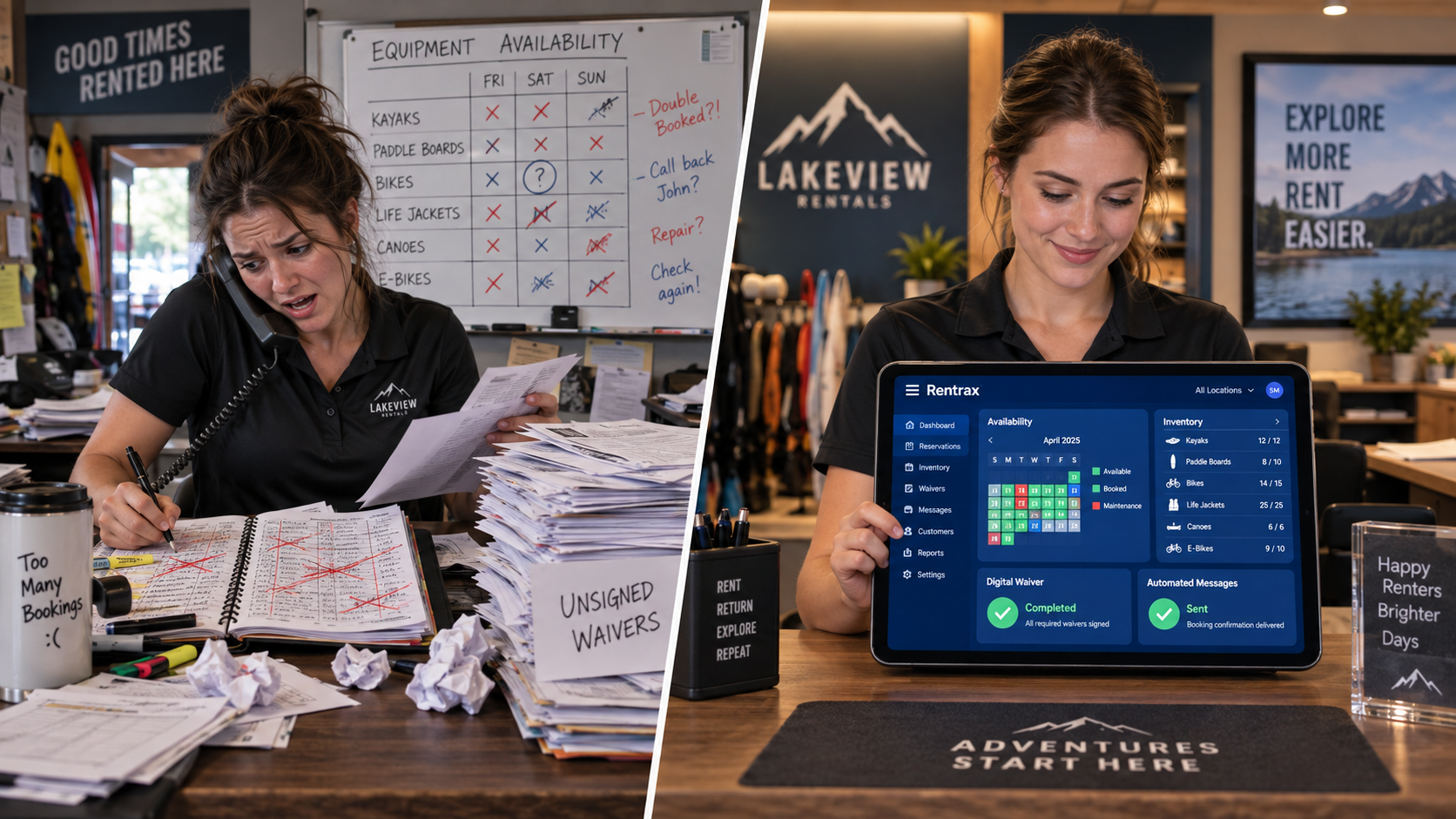
Discover the 7 biggest operational challenges rental businesses face in 2026 and how rental management software solves each one. See how Rentrax handles all seven.


