A home-based rental business is one of the few business models where you can start small, stay lean, and scale without a commercial lease. But “starting from home” doesn’t mean starting without a plan. The operators who build profitable rental businesses — whether they’re renting bikes, tools, party supplies, or outdoor gear — treat their operation like a real business from day one. This guide shows you exactly how.
-
Quick Answer: Can you run a rental business from home?
Yes. Many successful rental businesses operate from a home base -- particularly equipment, tool, outdoor gear, and specialty item rentals. You'll need a business license, rental agreements, liability insurance, and a booking system that prevents double bookings as volume grows. A storage space for inventory (garage, shed, or rented unit) and a dedicated home office are standard starting points.
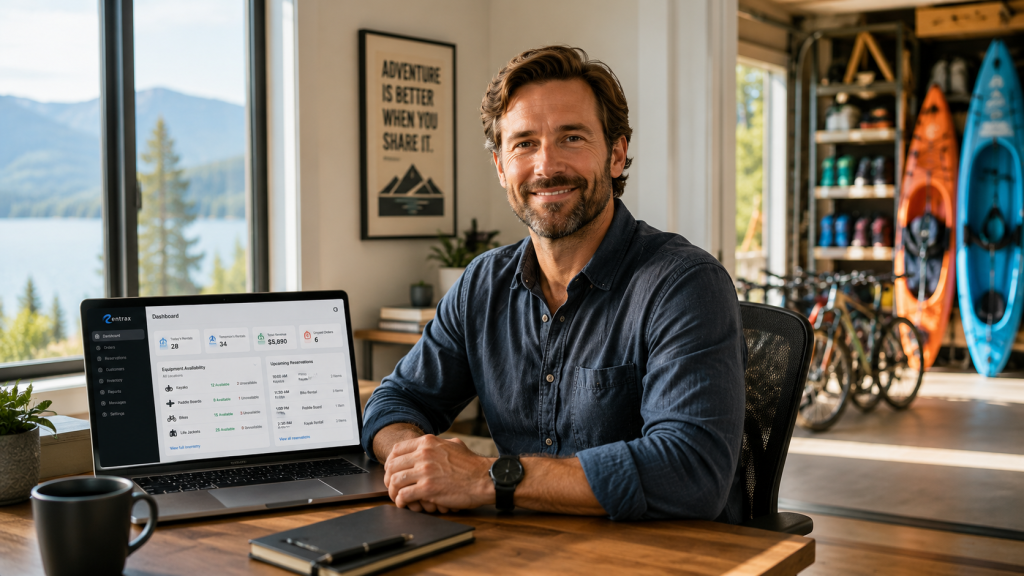
Is a Home-Based Rental Business Right for You?
Not every rental niche works well from home. The best home-based rental businesses share three traits: equipment that can be stored and managed without a storefront, customers who are comfortable with pickup/delivery logistics, and demand that justifies the operational setup.
Strong fits for home-based rental:
- Outdoor and adventure gear: bikes, kayaks, paddleboards, camping equipment
- Tools and small construction equipment
- Party and event supplies: tables, chairs, tents, lighting
- Specialty items: costumes, photography equipment, audio/visual gear
- Baby and child equipment rentals
Trickier from home: anything requiring a showroom, heavy machinery, or walk-in traffic. For those, a storage unit or small commercial space makes more sense.
Step 1: Choose a Niche with Real Demand
The biggest mistake new rental operators make is choosing a niche based on what they own rather than what the market wants. Before you invest in inventory, validate demand.
How to check demand in your area:
- Search Google for your niche + your city (e.g., “kayak rental [city]”) and see who comes up and what they charge
- Check Facebook Marketplace and Craigslist for people asking to rent items you’re considering
- Look at seasonal tourism data — outdoor gear rentals in resort towns, tool rentals near active construction zones
- Join local community groups and ask directly what people wish they could rent nearby
Once you find a niche with clear demand and manageable competition, you have a business. Without this step, you have inventory.
Step 2: Set Up Your Legal and Insurance Foundation
Business Registration
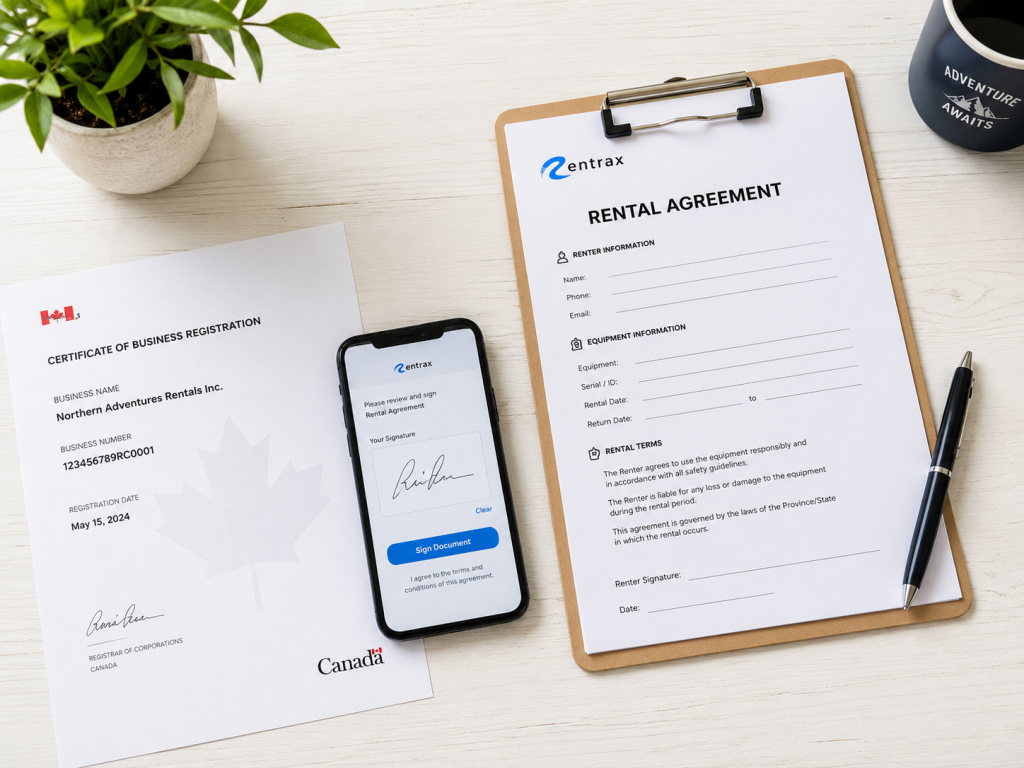
Register your business before you take your first booking. In most Canadian provinces you can register online in under an hour. Choose a structure that protects you — a sole proprietorship is the simplest, but a corporation limits your personal liability if a customer is injured or damages property.
Licenses and Permits
Home-based businesses have an extra layer to navigate: zoning. Many municipalities restrict commercial activity in residential zones — including storage of rental inventory. Check your local zoning bylaws before you set up. In some cases, a home occupation permit is all you need. In others, you’ll be directed to a storage unit or small commercial space.
Rental Agreements and Waivers
Every single rental needs a signed agreement. It should cover: what was rented, condition at checkout, deposit amount, return deadline, late fees, damage responsibility, and a liability waiver. Don’t skip the waiver — a customer who injures themselves on your equipment without a signed waiver is your problem. Digital agreements that customers sign before pickup are the fastest and most reliable way to handle this.
Insurance
Personal home insurance does not cover business activity. You need a commercial policy. At minimum: commercial general liability. Add equipment/property coverage for your inventory. If customers pick up from your home, confirm your policy covers on-premises customer interactions.
Step 3: Price Your Inventory for Profit
Most new rental operators underprice. They look at what competitors charge, match it or go slightly lower, and don’t account for the full cost of the rental.
A pricing model that actually works:
- Calculate your equipment cost divided by expected lifespan in rentals — that’s your break-even per rental
- Add 15% for maintenance and repairs (this is consistent across most rental categories)
- Add your target margin on top
- Check competitor rates and confirm the market will bear your number
- Build in a damage deposit — typically 20-50% of the item’s replacement value
Dynamic pricing is worth implementing early: charge more during peak demand periods (summer weekends, holidays, event season) and offer discounts for multi-day or off-peak bookings. This maximizes revenue without adding inventory.
Step 4: Build an Operation That Scales
The home-based rental business advantage is low overhead. The risk is that low overhead can mean low systems — and low systems break under volume.
The Double Booking Problem, Explained
Here’s what happens in most early-stage rental businesses: bookings come in through multiple channels — phone, text, email, maybe a basic website form. Someone logs them in a spreadsheet. During a busy weekend, two customers book the same item from different channels, and no one catches it until both show up at your door.
This isn’t a staffing problem. It’s a systems problem. The fix is a centralized booking platform where every reservation — regardless of channel — is recorded against live inventory in real time. When one unit is booked, it disappears from availability everywhere.
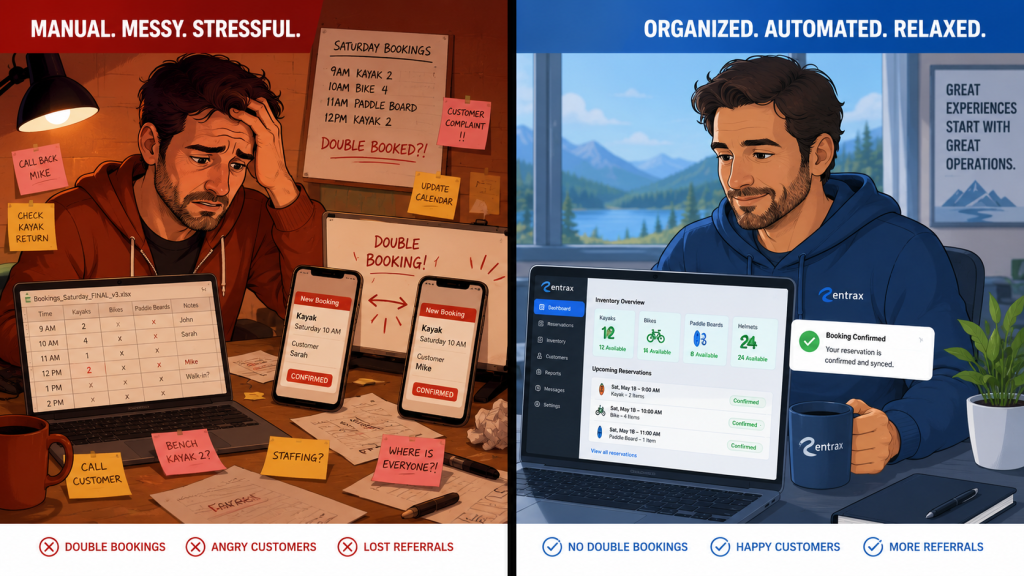
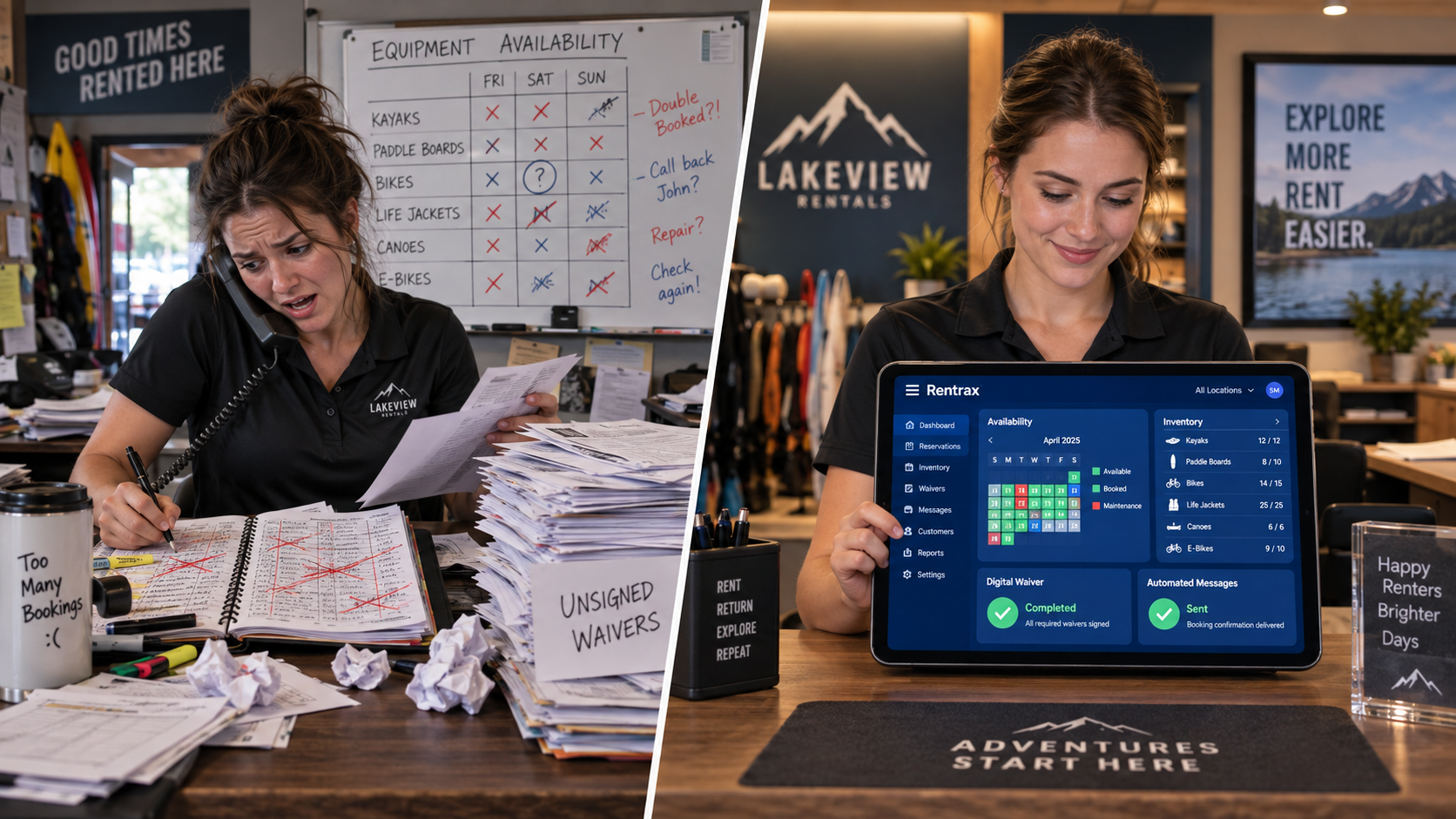
What a double booking situation looks like versus a centralized system preventing it before it happens.
Inventory Tracking
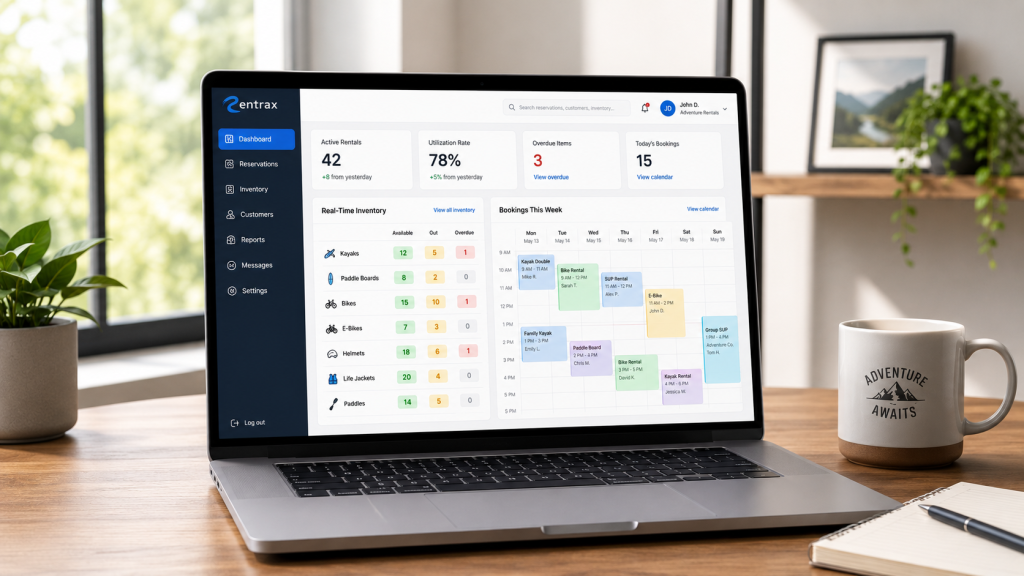
From your first rental, you need to know: what’s out, when it comes back, and what’s available for the next booking. If you’re tracking this in your head or on a whiteboard, you will make errors at volume. A simple inventory management system that ties to your bookings solves this.
Customer Check-In and Check-Out
A fast, professional check-in experience matters more than most home-based operators realize. Customers who wait 20 minutes while you print waivers, find the right item, and manually log the transaction will not come back. Digital check-in — where the waiver is signed in advance, payment is collected online, and the item is ready at pickup — creates a customer experience that drives reviews and referrals.
How Rentrax Fits a Home-Based Operation
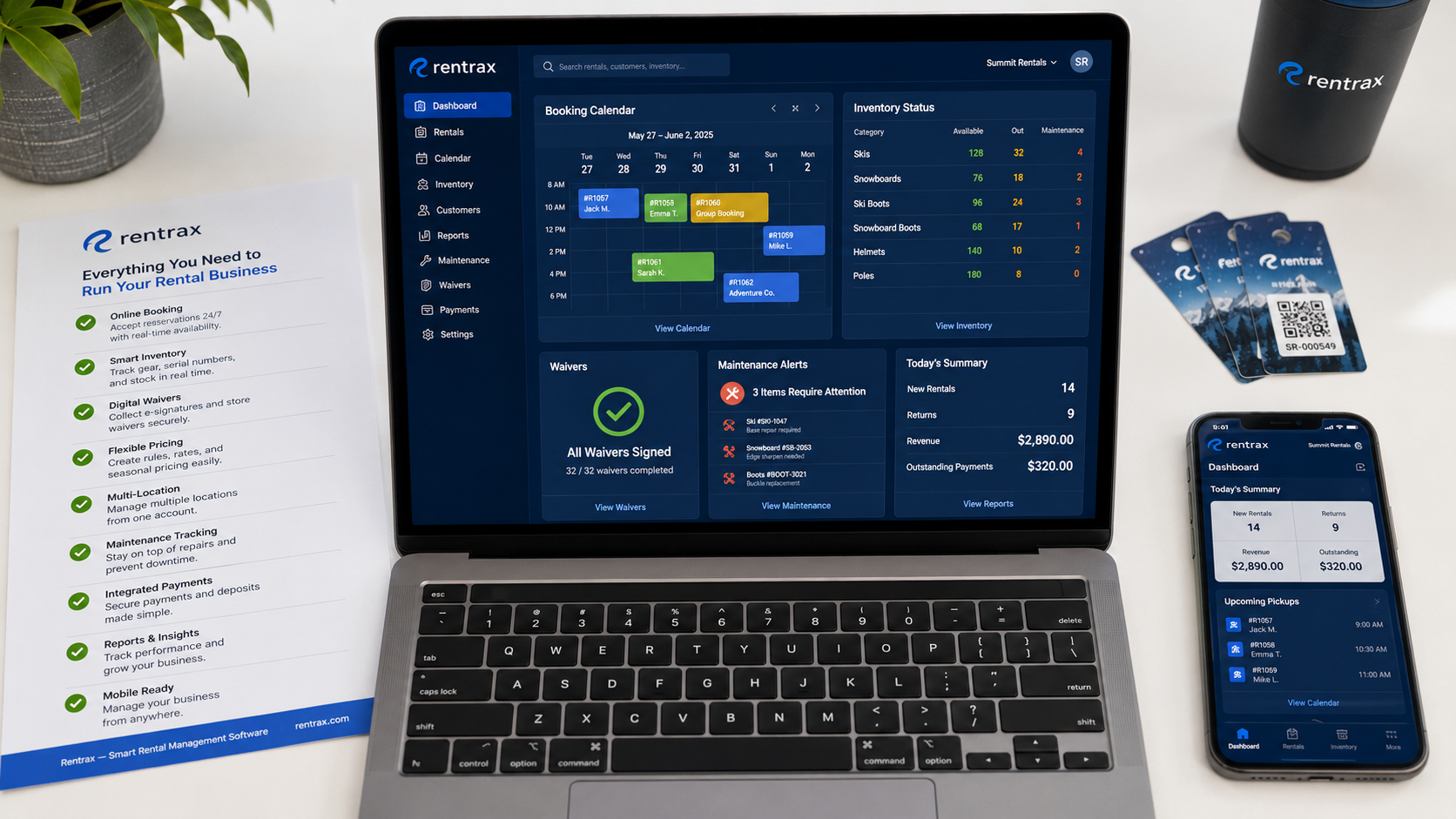
Rentrax is designed for exactly this kind of business: lean team, multiple rental categories, real customers who need a smooth experience. You don’t need enterprise software or an IT team. You need a platform that does the operational heavy lifting so you can focus on growing bookings.
What you’re dealing with | What Rentrax does |
Double bookings from multiple channels | Real-time inventory sync across all booking channels |
Paper waivers at pickup | Digital waivers signed online before the customer arrives |
Manual inventory tracking | Live dashboard — what’s out, available, overdue |
Slow check-in during busy periods | Fast checkout workflow built for high-volume days |
No visibility into revenue or utilization | Reporting that shows which items earn and which sit idle |
Deposits and payments tracked manually | Integrated payment processing and deposit management |
Frequently Asked Questions
-
How much money can you make with a home rental business?
It varies significantly by niche and market. A well-run bike rental operation in a tourist area can generate $50,000-$150,000 CAD in a season. Tool rental businesses in urban areas often run year-round with steadier, lower-peak revenue. The key variable is utilization rate -- how often your inventory is actually rented versus sitting idle.
-
Do I need a business license to rent things from home?
In most Canadian municipalities, yes. Even home-based businesses typically require a business license and, depending on your city, a home occupation permit. Requirements vary by province and municipality -- check with your local business registry before your first booking.
-
What is the best rental business to start from home?
The best niche depends on your local market. Outdoor gear, tools, and party/event supplies are consistently strong performers for home-based operations because inventory is manageable, demand is clear, and customers are used to pickup logistics. Research local demand before choosing.
-
How do I handle customers picking up from my home?
Have a designated pickup area -- a garage, driveway, or side entrance -- that's separate from your living space. Process all documentation digitally before arrival so pickup is fast. Confirm insurance covers on-premises customer interactions. Many operators eventually transition high-volume pickup to a storage unit or small commercial space.
-
What software should I use for a home rental business?
Use software built for rental workflows, not generic booking tools. You need real-time inventory tracking, digital waivers, online booking, payment processing, and reporting in one place. Rentrax is built specifically for rental businesses and works whether you're running 10 items or 1,000.