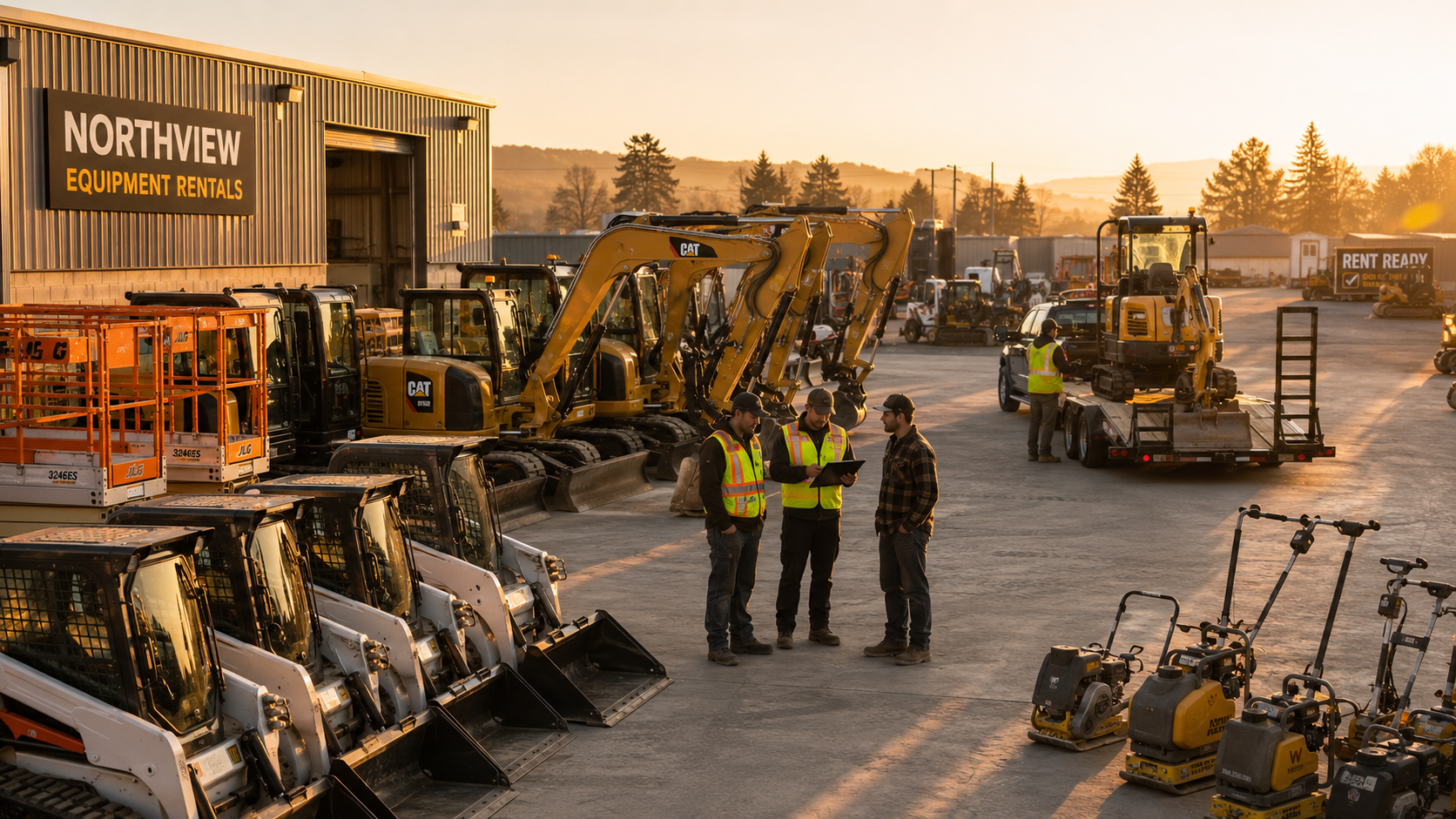
The construction equipment rental market in Canada is worth billions — and it’s growing. New housing projects, infrastructure spending, and a construction sector that increasingly prefers renting over buying are all driving demand. But for rental operators, growth creates its own problems. More bookings mean more chances for double bookings. Larger fleets mean more inventory to track. Busier seasons mean less room for operational error.
This post covers the business ideas and operational strategies that actually move the needle for construction equipment rental companies — from fleet optimization to technology decisions that prevent the mistakes that cost you customers and revenue.
-
Quick Answer: What are the best ideas for growing a construction equipment rental business?
The highest-impact ideas are: (1) real-time inventory management to eliminate double bookings and idle fleet costs, (2) online booking with automated confirmations to reduce staff overhead, (3) dynamic pricing to maximize revenue during peak season, (4) telematics integration to track equipment location and utilization, and (5) digital rental agreements to speed up customer check-in. All of these compound -- operators who implement them together consistently outperform those who address only one.
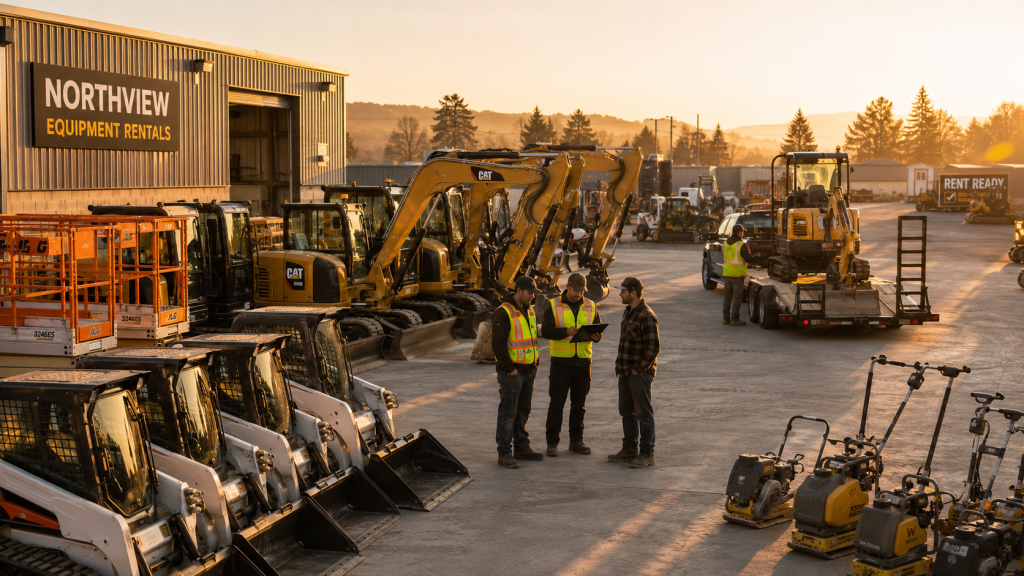
Idea 1: Eliminate Double Bookings with Real-Time Inventory Management
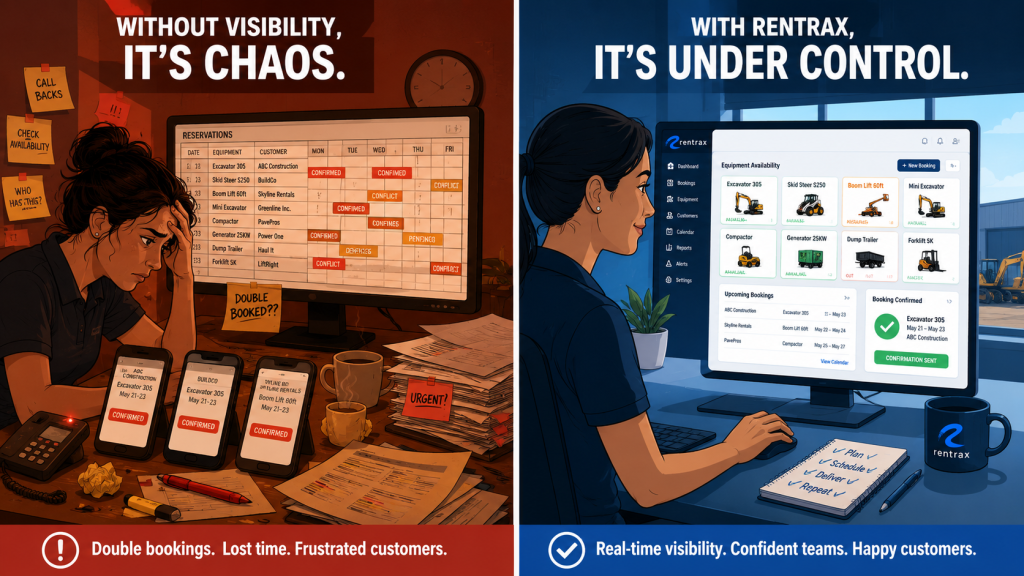
Double bookings are the most expensive and reputation-damaging mistake in construction equipment rental. A contractor who shows up for an excavator that’s already on-site somewhere else doesn’t just lose you one job — they lose you every future job and every referral they would have sent your way.
Double bookings happen for one reason: there’s no single source of truth for availability. Bookings come in through phone, email, in-person, and website, and somewhere in the handoff between channels, the same machine gets reserved twice.
The fix is a centralized rental management platform where every reservation — regardless of channel — is logged against live inventory. The moment a piece of equipment is booked, it disappears from availability everywhere. No manual cross-checking. No spreadsheet reconciliation. No Saturday morning phone calls explaining to a contractor why the machine they need is already gone.
For construction equipment specifically, this matters more than in most rental categories. Your customers are running job sites. A double booking doesn’t just inconvenience them — it shuts down their crew for the day.
Idea 2: Add Online Booking with Contractor-Friendly UX
Most construction equipment rental websites still require a phone call to book. That’s a friction point that costs you customers who are on-site, mid-project, and need to move fast. A contractor who can’t easily book your excavator online will find one they can book elsewhere.
Online booking for construction equipment needs to be designed for how contractors actually work:
- Mobile-first: contractors are checking from phones on job sites, not desktops
- Equipment-specific availability by date: show exactly what’s available for their project window
- Clear pickup and delivery options: many construction jobs need delivery to site, not pickup
- Instant confirmation: contractors need to lock in equipment before committing crews
Automated booking confirmations and reminders also reduce no-shows and last-minute cancellations — both of which cost you revenue and capacity you could have sold to someone else.
Idea 3: Build a Fleet Optimization Strategy
Most construction equipment rental businesses have a fleet utilization problem they don’t know about. Some machines rent constantly. Others sit for weeks at a time. The operators who grow profitably are the ones who can tell the difference — and act on it.
Track Utilization by Equipment
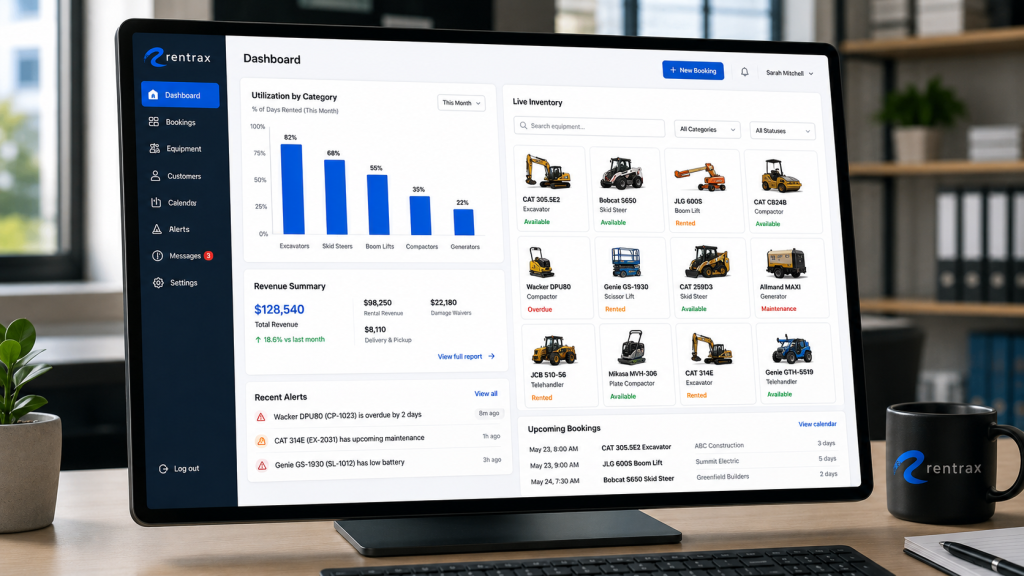
A piece of equipment that’s rented less than 50% of available days is underperforming. Either demand for that category is soft in your market, your pricing is off, or it’s not being marketed effectively. A rental management system with utilization reporting shows you exactly which assets are earning their keep and which aren’t.
Dynamic Pricing for Peak Season
Construction activity follows predictable seasonal and weather patterns. Peak season in your market — spring through fall in most of Canada — means you can charge more and fill your fleet faster. Off-peak, the right pricing strategy keeps utilization high rather than letting equipment sit.
Dynamic pricing in practice:
- Higher daily rates during peak construction season (May-October in most Canadian markets)
- Multi-week discounts that lock in longer-term rentals during shoulder periods
- Last-minute availability discounts on equipment with no bookings in the next 48 hours
- Project-based pricing for contractors with recurring needs — builds loyalty and predictability
Right-Size Your Fleet
The most expensive thing in construction equipment rental isn’t your highest-value machine. It’s the machine you bought speculatively that rarely rents. Use utilization data to make fleet decisions based on actual demand, not instinct. Add categories that are consistently sold out. Divest or stop replacing categories that chronically underperform.
Idea 4: Offer Delivery and On-Site Service as a Revenue Stream
Construction equipment rental is one of the few categories where delivery is often as important as the equipment itself. A contractor running a commercial build can’t always send someone to your yard. The operator who offers reliable delivery and pickup — and prices it well — wins long-term contractor relationships.
Delivery as a revenue opportunity:
- Charge a transparent delivery fee (flat rate by zone or distance-based) — don’t absorb this cost
- Offer same-day or next-day delivery as a premium service during peak season
- Offer basic on-site servicing for longer-term rentals — fuel delivery, preventative maintenance checks
- Track delivery schedules and vehicle locations to avoid conflicts and delays
Operators who build delivery into their standard offering typically retain contractors longer because they reduce the logistics burden on the job site. This is a relationship-building tool, not just a logistics function.
Idea 5: Implement Digital Rental Agreements and Waivers
Paper rental agreements in construction equipment rental create real operational problems. Documents get lost on job sites. Damage disputes arise when the condition at pickup isn’t clearly documented. Contractors who need to sign before a crew can start are waiting in your office instead of working.
Digital rental agreements solve all of this:
- Sent to the contractor before equipment arrives — signed before pickup or delivery, not during
- Include condition photos at checkout, timestamped and attached to the rental record
- Automatically stored and retrievable when a damage dispute arises
- Eliminates paper handling, printing, filing, and lost document issues
For construction equipment specifically — where individual pieces can be worth hundreds of thousands of dollars — having a clear digital paper trail on every rental isn’t just efficient. It’s essential protection.
Idea 6: Build Contractor Relationships with Account Management
The most profitable construction equipment rental businesses don’t just have customers — they have contractors who rent from them every project. Building those relationships intentionally creates a predictable revenue base that’s far more valuable than chasing one-off bookings.
Strategies that work:
- Contractor accounts with stored equipment preferences, delivery addresses, and payment methods — makes rebooking one step
- Volume pricing for contractors who commit to a minimum rental frequency — rewards loyalty
- Proactive availability alerts: when a machine a contractor frequently rents becomes available, notify them
- Dedicated account contact for large or recurring customers — one person they can call who knows their history
The data you need to run this well — what each contractor rents, how often, at what margin — lives in your rental management system. Operators running on spreadsheets simply don’t have visibility into this. Those using purpose-built software do.
How Rentrax Supports Construction Equipment Rental Operations
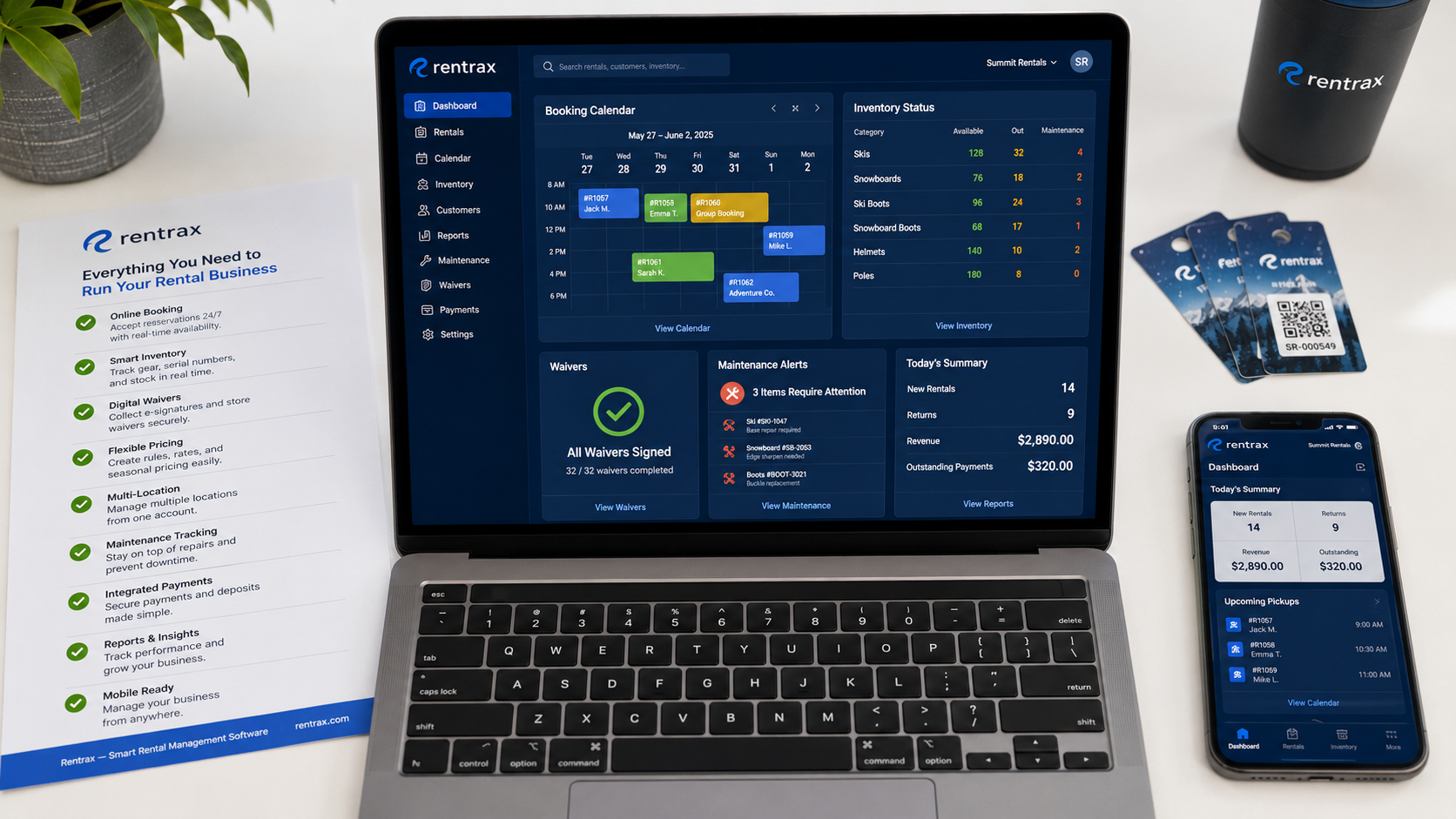
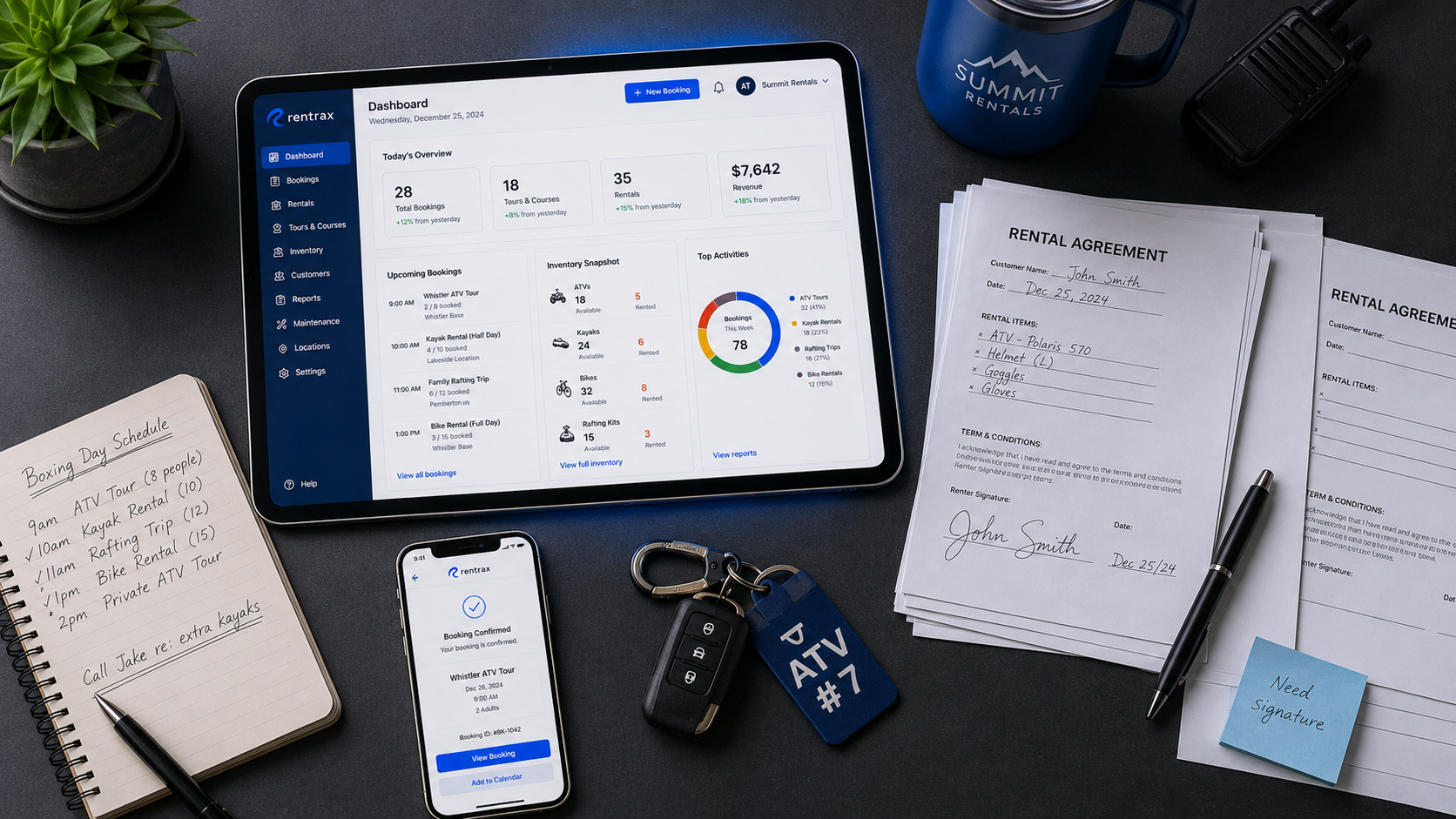
Rentrax is built for the operational realities of equipment rental businesses — including the complexity and scale that construction equipment rental demands.
Operational Challenge | How Rentrax Addresses It |
Double bookings | Real-time inventory sync across all booking channels — phone, web, in-person |
Idle fleet and low utilization | Utilization reporting by equipment category to drive pricing and fleet decisions |
Paper waivers and agreements | Digital agreements with condition documentation — signed before equipment leaves |
Manual booking process | Online booking with instant confirmation and automated reminders |
Delivery scheduling conflicts | Booking and scheduling tools that account for delivery logistics |
No contractor account history | Customer profiles with full rental history, preferences, and volume data |
Revenue leakage on late returns | Automated late fee tracking and notification |

Frequently Asked Questions
-
How profitable is construction equipment rental?
Construction equipment rental is one of the more capital-intensive rental categories, but margins can be strong when fleet utilization is managed well. Industry benchmarks suggest healthy construction rental businesses achieve 35-50% EBITDA margins. The key variables are utilization rate (target 60%+ of available days), maintenance cost control, and pricing discipline during peak season.
-
What construction equipment is most in demand for rental?
Demand varies by market, but consistently high-demand categories include: excavators and mini-excavators, skid steers and compact track loaders, scissor lifts and boom lifts, compactors, and concrete equipment (mixers, pumps, saws). Mini-excavators in particular have seen strong rental growth as they serve both commercial and residential contractors.
-
How do I prevent double bookings for construction equipment?
Use a centralized rental management system where all bookings -- regardless of channel -- update a single live inventory. Manual reconciliation across spreadsheets or separate systems will always create double booking risk at volume. Rentrax provides real-time availability across all channels in a single platform.
-
How do I handle equipment damage disputes with contractors?
Digital rental agreements with timestamped condition photos at checkout and return create an unambiguous record for every rental. Without this, damage disputes become a he-said/she-said situation. With it, you have documentation that protects both parties and resolves disputes quickly.
-
What's the best way to grow a construction equipment rental business?
The highest-leverage moves are: (1) eliminate operational errors like double bookings that damage contractor relationships, (2) build contractor account programs that create recurring revenue, (3) use utilization data to optimize your fleet and pricing, and (4) add delivery services to win contractors who can't come to your yard. All of these require operational infrastructure -- specifically, purpose-built rental management software.