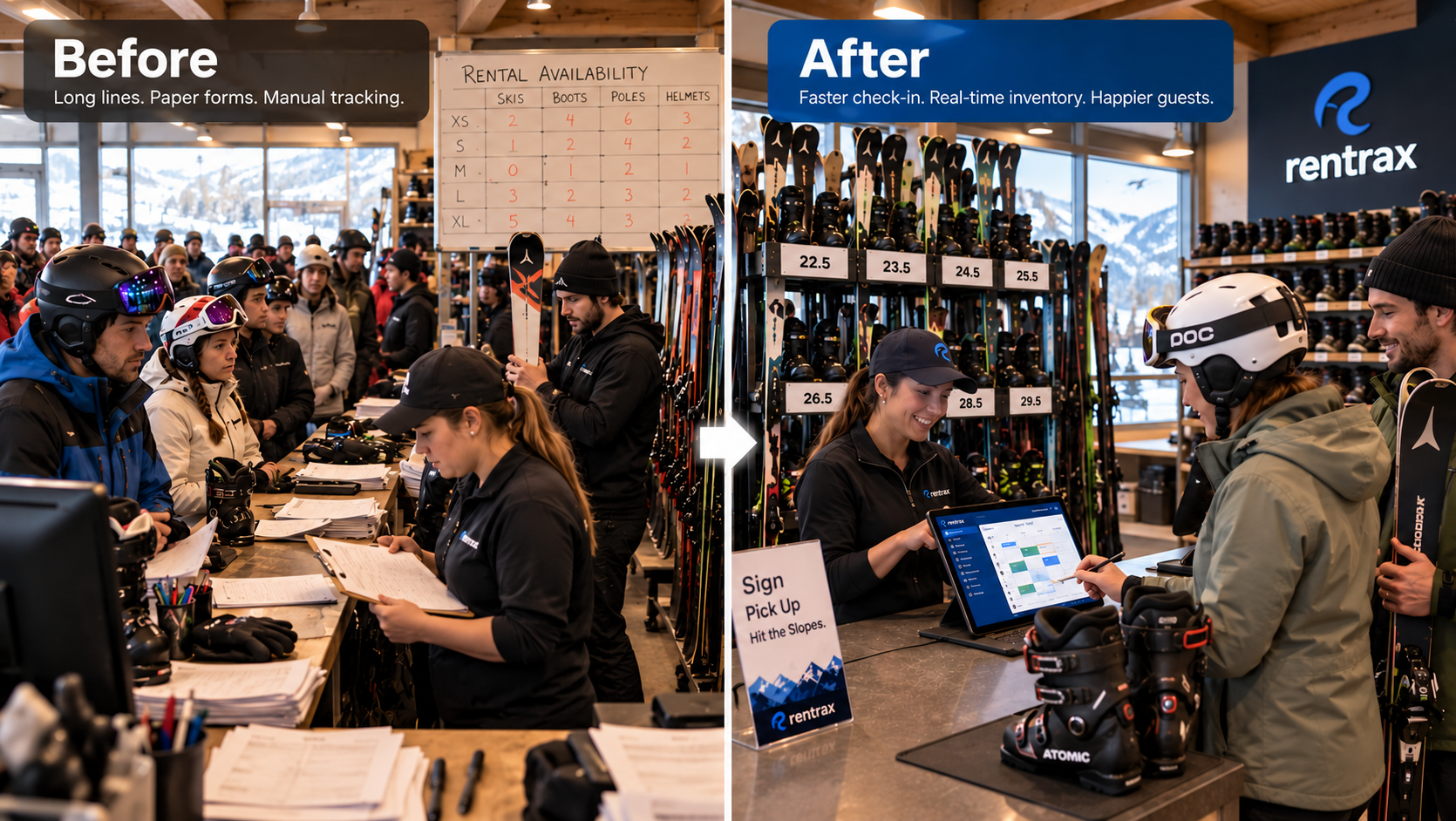
How to Reduce Ski Rental Checkout Lines During Peak Season
Long ski rental checkout lines cost you customers and revenue. Here
are 7 proven ways ski rental software reduces wait times and speeds up peak-season service.

The Jet Ski rental business is a lucrative opportunity in coastal destinations, lakeside towns, and popular vacation spots. Companies like H2O Jet Ski Rentals, Miami Jet Ski Rental, and SD Adventures have turned water sports enthusiasm into highly profitable businesses. The success of these Jet ski rental businesses for sale isn’t just about having high-quality Jet Skis; it’s about smart business management, seamless booking experiences, and top-tier customer service. To thrive in this industry, here is an article to figure out How to start a Jet Ski rental business. To find out more about Jet ski business plans, just read this text through.
Absolutely! A Jet Ski rental business can be highly profitable, especially in high-traffic tourist destinations. Here’s why you should get started on learning How to start a Jet Ski hire business.
With the right location, well-maintained fleet, and efficient management, a Jet Ski rental business can be highly profitable. These are not only the keys for strating a jet ski rental business, but notes to know How to start a boat rental business. The key to maximizing earnings lies in smart pricing, strategic marketing, and using an efficient rental management system like Rentrax.

The revenue you generate will depend on pricing, demand, and fleet size.
Key factors influencing revenue:
| Rental Price | Rentals per Day | Fleet Size | Daily Revenue | Monthly Revenue (30 days) | Seasonal Revenue (5 months) |
|---|---|---|---|---|---|
| $100/hour | 5 rentals per jet ski | 5 jet skis | $2,500 | $75,000 | $375,000 |
| $150/hour | 6 rentals per jet ski | 7 jet skis | $6,300 | $189,000 | $945,000 |
| $200/hour | 8 rentals per jet ski | 10 jet skis | $16,000 | $480,000 | $2,400,000 |
While revenues are attractive, expenses must be managed well. Here’s an estimated breakdown:
| Expense Type | Cost Range (Annual) | Notes |
|---|---|---|
| Jet Skis Purchase (5-10 units) | $40,000 - $150,000 | New: $10K - $15K each; Used: $5K - $10K each |
| Insurance (Liability & Fleet) | $10,000 - $30,000 | Varies by coverage & location |
| Docking/Storage Fees | $6,000 - $24,000 | Marina rental/storage facility |
| Maintenance & Repairs | $5,000 - $20,000 | Oil changes, engine fixes, hull repairs |
| Fuel Costs | $10,000 - $30,000 | Depends on rental frequency & fuel efficiency |
| Marketing (SEO, ads, website) | $5,000 - $20,000 | Digital ads, partnerships, social media |
| Licenses & Permits | $1,500 - $10,000 | Location-dependent |
| Staff Salaries (2-5 employees) | $30,000 - $100,000 | If hiring employees |
Using the revenue and cost estimates, we can calculate potential profits.
| Revenue | Expenses | Net Profit |
|---|---|---|
| $375,000 | $107,500 | $267,500 |
| $945,000 | $220,000 | $725,000 |
| $2,400,000 | $384,000 | $2,016,000 |
Dreaming of running a profitable Jet Ski rental business or planning on How to start a kayak rental business? With the right strategy, you can turn waves into wealth. Keep reading to discover the essential steps to launch, manage, and how to start a jet ski rental.
Before investing, understand your target market. Research tourist demand, peak seasons, competitor pricing, and customer preferences. For example, if you’re setting up in Miami, expect high demand year-round, but in Lake Tahoe, your business may be seasonal.
Identify unique selling points, guided Jet Ski tours, premium models, or package deals. This is the key to stand out in the process of launching any business. Market Research helps you understand demand, competition, pricing, and legal requirements.
Here is a breakdown for Jet Ski Rental Market Research:
You need to figure out who will rent your jet skis and where the best location is.
| Factor | Why It Matters | Example |
|---|---|---|
| Tourism Levels | More tourists = higher demand | Florida, USA has year-round tourists, whereas Ontario, Canada has a seasonal market. |
| Weather & Seasonality | Warmer weather extends rental seasons | In Australia (Gold Coast), rentals can operate all year. In Canada, the season may be only 4–5 months. |
| Demographics | Young adults, families, adventure seekers, and couples are common customers | In Miami, younger thrill-seekers may be your main audience, while in Sydney, family vacationers may be key. |
| Water Access & Regulations | Some places have strict jet ski rules | In California, specific areas restrict jet ski usage near shorelines. |
Find out who else is renting jet skis in your desired area and learn from them.
🔹 How to Research Competitors?
Here is an example of competitive analysis table:
| Competitor Name | Location | Price per Hour | Fleet Size | Unique Selling Point | Customer Reviews (Pros & Cons) |
|---|---|---|---|---|---|
| Ocean Jet Ski Rentals | Miami, FL | $120 | 10 | Offers guided tours | Pros: Great customer service; Cons: Long wait times |
| Gold Coast Water Sports | Australia | $99 | 15 | Packages with parasailing | Pros: Affordable; Cons: Limited jet ski models |
| Lake Tahoe Jet Ski | California | $150 | 8 | Luxury high-speed models | Pros: High-quality jet skis; Cons: Expensive |
Find out how many customers you can expect and how much you should charge.
🔹 How to Estimate Demand?
Here is a pricing strategy example:
| Pricing Factor | Example Rate |
|---|---|
| Hourly Rate | $100–$150 |
| Half-Day Rental (4 hours) | $250–$400 |
| Full-Day Rental (8 hours) | $450–$700 |
| Guided Jet Ski Tour | $200+ per person |

Remember that location estimates the answer to “how much does it cost to start a jet ski rental business”. So the right location can make or break your business. Look for high-traffic beaches, lakes, or marinas with minimal competition and strong tourist activity.
Some cities, like San Diego, have designated water sports zones where Jet Ski rentals thrive. Check local zoning laws to avoid restrictions. Also, make sure the customer service is absolutely great. To empower customer service, we recommend using Jet Ski rental management software. Which increases the chance of making your business perfect.
| Factor | Why It Matters | Example |
|---|---|---|
| Tourist Traffic | More tourists = more customers | Miami Beach, FL (high demand) vs. a small town lake (low demand) |
| Weather & Seasonality | Warmer weather allows year-round operations | Gold Coast, Australia (year-round) vs. Toronto, Canada (4-5 month season) |
| Water Conditions | Calm waters are safer and attract beginners | A quiet bay or lake is better than a rough oceanfront |
| Legal & Environmental Rules | Some areas ban jet skis or have strict rules | California limits jet ski use in some protected waters |
| Rental Competition | Too much competition can reduce profits | If there are already 5+ rental shops, the market might be saturated |
| Docking & Storage Availability | You need space to store and launch jet skis | Marinas offer easy access, but may charge high fees |
| Accessibility & Parking | Customers need to find you easily and park nearby | Beachfronts with large parking lots attract more customers |
Here are the best types of locations for a Jet Ski rental business and their pros/cons.
| Location Type | Pros | Cons | Example |
|---|---|---|---|
| Tourist Beaches | High demand, easy marketing | High permit costs, competition | Waikiki Beach, Hawaii |
| Lake Resorts | Less competition, calmer waters | Shorter season, may rely on resort partnerships | Lake Tahoe, California |
| Marinas & Harbors | Easy docking, professional setup | Marina fees, licensing requirements | Sydney Harbour, Australia |
| Rivers & Bays | Calm waters, scenic tours possible | Some rivers may have speed restrictions | Tampa Bay, Florida |
Use a scoring system (out of 10) to evaluate potential locations.
| Location Name | Tourist Foot Traffic | Season Length | Legal Restrictions | Competition | Water Conditions | Dock & Parking Availability | Total Score |
|---|---|---|---|---|---|---|---|
| Miami Beach, FL | 10/10 | 10/10 | 7/10 | 6/10 | 9/10 | 8/10 | 50/60 |
| Lake Tahoe, CA | 7/10 | 5/10 | 9/10 | 5/10 | 10/10 | 7/10 | 43/60 |
| Gold Coast, AUS | 9/10 | 10/10 | 8/10 | 6/10 | 9/10 | 7/10 | 49/60 |
A solid business plan helps secure funding and guides your growth. Your answer to how to run a jet ski rental business, should include:
Notice using Water sports equipment rental software in financial projections to avoid failure in the beginning.
How your rental business will operate.
Key Considerations:
Legal compliance is essential. Obtain the necessary business license, watercraft permits, and local certifications. Some states, like Florida, require operators to pass a boating safety course. Don’t skip this step; penalties for non-compliance can be severe!
Regardless of your location, here are the basic legal requirements for starting a jet ski rental business:
For example:
If you operate in Toronto, Ontario (Lake Ontario):
For example:
If you set up in Gold Coast, Queensland:
| Requirement | USA (Florida Example) | Canada (Ontario Example) | Australia (Queensland Example) |
|---|---|---|---|
| Business Registration | Florida Department of State | Ontario Business Registry | ASIC (Australia) |
| Sales Tax (GST/VAT) | Register for Sales Tax | Register for HST/GST | Register for GST |
| Watercraft Rental Permit | FWC Jet Ski Rental Permit | No permit, but safety compliance | Queensland Jet Ski Permit |
| Boating License for Business Owner | Required | PCOC (Boating License) Required | Commercial Jet Ski License Required |
| Minimum Age to Rent | 18+ | 16+ | 16+ |
| Minimum Age to Operate | 14+ | 16+ | 16+ |
| Boating Safety Course for Renters | Required for some (born after 1988) | Not required, but safety briefing is | Required unless under guided supervision |
| Liability Insurance Requirement | $500,000+ | $1M+ | $10M+ |
| Jet Ski Registration | With Florida DMV | With Transport Canada | As Commercial Use Vessel |
| Life Jackets Required? | Yes | Yes | Yes |
Decide whether to buy or lease based on budget and flexibility. This section is the answer to how much does it cost to start a jet ski rental business.
| Option | Pros | Cons | Example Models |
|---|---|---|---|
| Buy New | Full ownership, long lifespan | High upfront cost | Yamaha VX Cruiser, Sea-Doo GTI |
| Buy Used | Lower cost, faster ROI | Potential maintenance issues | 2019 Kawasaki STX-15F |
| Lease | Lower initial investment, fleet upgrades | Monthly payments, no asset ownership | Flexible lease plans from dealers |
When choosing jet skis for your rental business, you need durability, fuel efficiency, safety, and affordability. Rental jet skis must handle heavy usage, saltwater exposure, and different rider skill levels.
Choosing the Right Jet Skis: Understanding the key differences between them can help you select the best options for your fleet.

💰 Best For: Rental businesses in busy tourist areas that need high reliability.

💰 Best For: Operators focusing on beginner-friendly rentals and guided tours.

💰 Best For: High-performance jet ski rentals and adventure tour operators.

💰 Best For: Startups looking to minimize costs while offering 3-seater rentals.

💰 Best For: Rental businesses offering budget-friendly, short-term jet ski rentals.
Jet Ski rental business expenses for 2025 need accuracy and details. Here, we will break down into startup costs (one-time expenses) and operating costs (monthly/annual expenses).
| Expense | Estimated Cost (USD) | Notes |
|---|---|---|
| Jet Ski Fleet (5–10 units) | $8,000–$15,000 per jet ski | Yamaha VX & Sea-Doo GTI are best for rentals |
| Jet Ski Trailer(s) | $1,500–$4,000 per trailer | Needed for transport & storage |
| Permits & Business Registration | $500–$5,000 | Varies by location (USA, Canada, Australia) |
| Insurance (Liability & Watercraft) | $3,000–$7,000 per year | Depends on coverage & location |
| Safety Gear (Life Jackets, First-Aid, Radios) | $500–$2,000 | Required by law |
| Docking/Storage Setup | $2,000–$15,000 | Dock rental or dry storage setup |
| Website Development & Booking System | $2,000–$10,000 | Professional website + online booking |
| Initial Marketing (Branding, Ads, Local Promotion) | $3,000–$10,000 | Social media, PPC, signage |
| Miscellaneous (Legal, Accountant, Tools, etc.) | $2,000–$5,000 | Legal fees, software, GPS tracking |
| Total Estimated Startup Cost (for 5 Jet Skis) | $60,000–$130,000 |
Pro Tip: If you lease instead of buying, your upfront cost can drop to ~$30,000–$50,000.
| Expense | Estimated Cost (USD/Month) | Notes |
|---|---|---|
| Jet Ski Loan/Lease Payments (If leasing) | $1,000–$4,000 | Depends on lease terms & fleet size |
| Insurance (Watercraft & Liability) | $300–$800 | Required for operations |
| Docking/Storage Fees | $500–$2,500 | Marina or warehouse storage |
| Fuel Costs | $500–$3,000 | 4-stroke engines are fuel-efficient |
| Jet Ski Maintenance & Repairs | $200–$1,500 | Regular servicing & wear-and-tear |
| Employee Salaries (If hiring staff) | $3,000–$10,000 | Seasonal employees for busy months |
| Marketing & Advertising | $1,000–$5,000 | Google Ads, social media, partnerships |
| Booking Software & Website Hosting | $100–$500 | Online booking system |
| Miscellaneous (Permits, Cleaning, Taxes, etc.) | $500–$2,000 | Unexpected costs |
| Total Monthly Operating Cost | $7,000–$25,000 |
🔹 Annual Operating Cost Estimate: $84,000–$300,000
🔹 Breakeven Point: Depends on rental pricing & demand.

Protect your business with:
Without insurance, a single accident could sink your business financially. How much is insurance for a jet ski rental business? On average, you can expect to pay between $2,000 and $5,000 per year for general liability insurance.
| Fleet Size | Low Estimate (USD/Year) | High Estimate (USD/Year) |
|---|---|---|
| 3 Jet Skis | $4,000 | $10,000 |
| 5 Jet Skis | $6,000 | $15,000 |
| 10 Jet Skis | $10,000 | $25,000 |
A strong marketing strategy ensures steady bookings. In the answer of how to start a jet ski rental company, Use:
For Example: San Diego Jet Ski Rentals boosted bookings by 30% after partnering with beachfront resorts for exclusive deals.
Manual bookings lead to errors, duplicate booking, messy inventory and unclear financial reports.
Having rental management software can be very beneficial for your jet ski rental business, especially as you grow and scale. This type of software helps automate many aspects of your business, making it easier to track inventory, manage bookings, schedule rentals, and handle customer communication. Here’s an overview of the types of software you may need and whether you should implement them right now.
It helps you automate bookings, payments, fleet management, and customer data.
⭐ Recommended for 2025: Rentrax
By streamlining operations, Rentrax helps you focus on scaling your business while maximizing Jet ski rental business profit.
You’ll need a POS system if you handle payments.
⭐ Recommended for 2025: Square or Stripe
A CRM helps you manage and nurture customer relationships. This is useful for sending reminders, handling customer support, and building loyalty.
⭐ Recommended for 2025: HubSpot or Zoho
To keep track of your income, expenses, and taxes, an accounting system will save you time and ensure compliance.
⭐ Recommended for 2025: QuickBooks or FreshBooks
Tracking key performance indicators (KPIs) helps measure success and optimize operations. By analyzing these metrics, you can improve efficiency, maximize profits, and ensure customer satisfaction. How to start your own jet ski rental business? Here are some other tips.
By considering these factors and tracking the right KPIs, you’ll run a profitable, Jet Ski rental business.
When starting a Jet Ski rental business, it’s easy to get caught up in the excitement of launching a new venture. However, certain pitfalls can derail your success if you’re not careful. Here are some things not to do when planning on How to start a Jet Ski hire business.
Avoiding common mistakes is crucial to ensure your business thrives and provides a memorable experience for customers. So how to start a jet ski business? Avoid common mistakes we have discussed.
Safety should always be a priority in the Jet Ski rental business. Providing the proper gear not only ensures the well-being of your customers but also helps to minimize liability. Here are the safety equipments:
Investing in quality, certified safety gear not only helps protect your customers. In the other hand it builds your reputation as a trustworthy, safety-conscious rental business.
Two teenage entrepreneurs from Indianapolis turned a market gap into a thriving jet ski rental business. After realizing traditional rental companies limited customers under 25, they launched Jet Ski Indy, offering rentals to younger riders. Facing regulatory roadblocks, they pivoted to Indiana’s first jet ski delivery service, bringing watercraft to various public lakes. Despite challenges in funding and operations, they grew their business while balancing full-time education. Their initiative, “Find Your Wave,” mentors young entrepreneurs, and they plan to expand their fleet while creating job opportunities in underserved communities.
Jet Ski Indy is a testament to how young entrepreneurs, with the right vision and adaptability, can turn challenges into opportunities and disrupt an industry.
Yes, with growing demand for outdoor activities and water sports, it remains profitable.
It can be a profitable and sustainable business IF:
Starting a jet ski rental business typically costs $50,000 to $250,000, depending on factors like location, fleet size, insurance, and permits. Key expenses include purchasing jet skis ($8,000–$15,000 each), insurance ($3,000–$7,000 per jet ski annually), docking/storage fees ($500–$2,000/month), marketing ($1,000+/month), and maintenance. If leasing instead of buying, initial costs may be lower but ongoing expenses will be higher.
Insurance for a jet ski rental business typically costs $3,000 to $7,000 per jet ski per year, depending on factors like location, coverage limits, and accident history. General liability insurance for the business can range from $10,000 to $30,000 annually. Additional policies, such as worker’s compensation and equipment coverage, can further increase costs.
The profit of a jet ski rental business varies based on location, pricing, and fleet size, but successful businesses can generate $250,000 to over $1 million in annual revenue, with profit margins ranging from 30% to 60%. After deducting expenses like insurance, maintenance, and storage, a well-run operation can make $100,000 to $500,000+ in net profit per year, especially in high-tourism areas.
To start a jet ski rental business in Florida, choose a high-tourism waterfront location, register your business, and obtain necessary permits from the Florida Fish and Wildlife Conservation Commission (FWC), including a boat rental license. Secure liability insurance ($1M+ coverage) and fleet insurance, then buy or lease jet skis that meet safety standards. Rent a dock space or beachfront location, implement safety measures (life jackets, renter age restrictions, and boating safety IDs), and create rental agreements with liability waivers. Use Google Ads, social media, and local partnerships to market your business, and streamline operations with rental management software.
Long ski rental checkout lines cost you customers and revenue. Here
are 7 proven ways ski rental software reduces wait times and speeds up peak-season service.
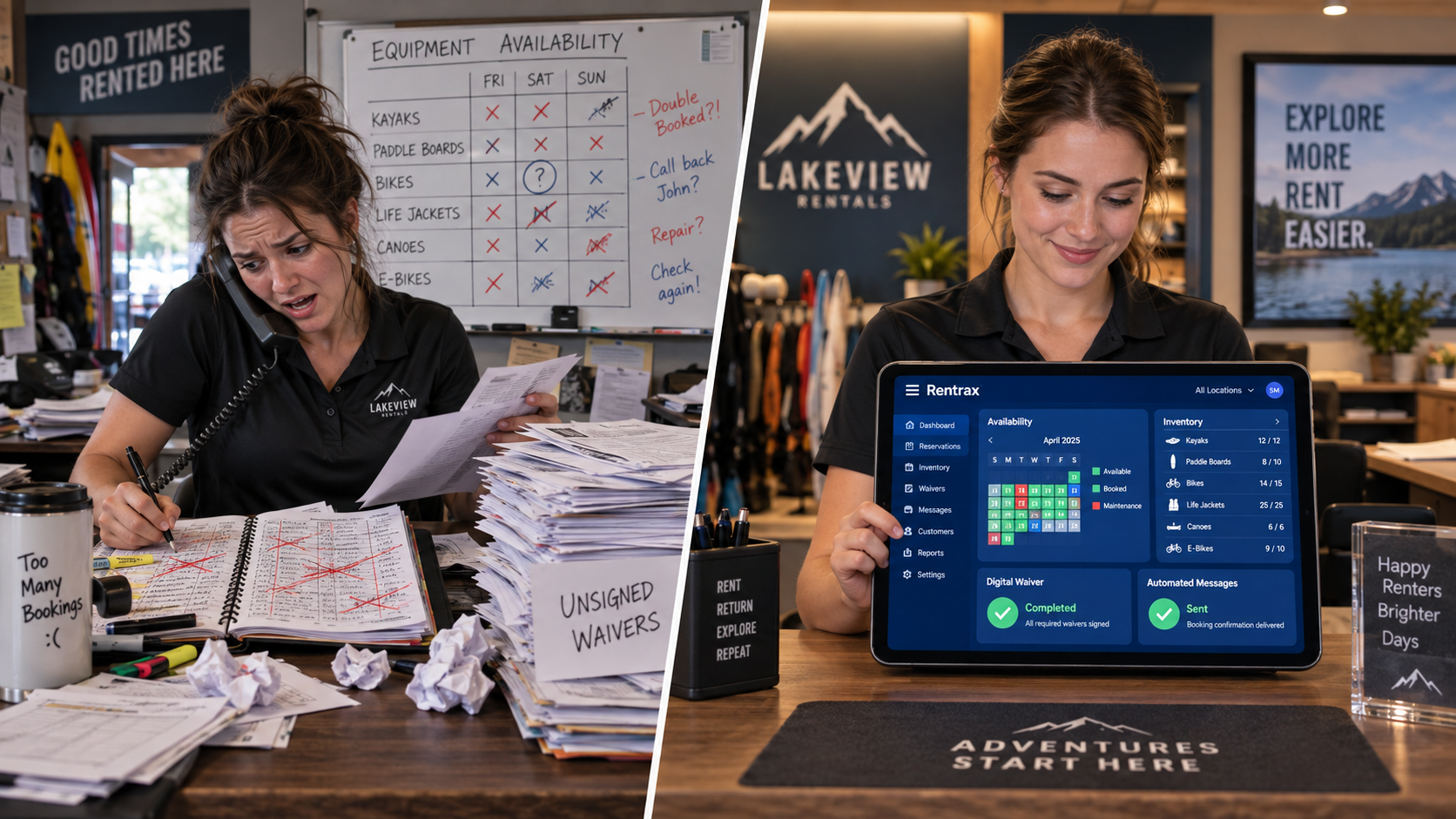
Discover the 7 biggest operational challenges rental businesses face in 2026 and how rental management software solves each one. See how Rentrax handles all seven.


